
13 Best ServiceMax Alternatives to Try in 2026
April 2, 2026 - 26 min read

April 2, 2026 - 26 min read

Looking for ServiceMax alternatives because the enterprise pricing and complexity don’t fit your operation? You’re not alone. PTC acquired ServiceMax for $1.46 billion in 2022, reinforcing its focus on asset-centric enterprise field service. But for most US home service businesses, HVAC contractors, and growing field service teams, there are better options that deliver modern field service management software without the enterprise overhead.
Best ServiceMax Alternatives by Category:
ServiceMax is a cloud-native, asset-centric field service management software platform owned by PTC. It excels at managing complex equipment lifecycles for industries like telecom, medical devices, and oil and gas.
But here’s the problem: most field service businesses aren’t managing $500,000 MRI machines. They’re scheduling HVAC repairs, plumbing calls, and electrical jobs. For these businesses, ServiceMax creates more problems than it solves.
1. Mobile app performance issues. Users report the ServiceMax Go app takes “one hour to close down a job,” loses sync 4–5 times daily, and requires 25 minutes to re-initialize. One reviewer described 10-second delays for a single button press.
2. Enterprise pricing that excludes small businesses. ServiceMax doesn’t publish transparent pricing. Expect $100–$300/user/month plus $5,000–$50,000+ in implementation costs. Non-Salesforce users face additional licensing fees.
Before evaluating enterprise platforms like ServiceMax, honestly assess your needs. Most field service businesses under 50 technicians will find more value in modern SMB-focused platforms that prioritize ease of use and quick implementation. Get on a demo call with FieldCamp and you will know what an AI-powered SMB platform is.
3. Implementation takes months, not days. A 2–6 month implementation timeline is standard. Some businesses report 6–12 months before they’re fully operational.
4. Overkill complexity for home services. ServiceMax’s asset lifecycle management, warranty tracking, and parts management are built for industrial operations. HVAC and plumbing businesses don’t need most of these features. Read our full ServiceMax review for a detailed breakdown.
5. Limited offline capabilities. Technicians working in basements, rural areas, or underground utility spaces report losing connectivity and can’t complete critical workflows.
If your team runs home services, trades, or field operations under 50 technicians, ServiceMax is likely too complex, too expensive, and too slow to implement for your needs.
According to Salesforce’s State of Service research, 78% of high-performing field service organizations now use AI, and 83% use workflow automation. The field service management market is projected to hit $8.06 billion by 2028. Modern alternatives have caught up and, in many areas, surpassed ServiceMax’s capabilities for the average field service business.
ServiceMax was built for enterprise asset lifecycle management — billion-dollar manufacturers tracking turbines and MRI machines across global fleets. But if you’re running an HVAC, plumbing, electrical, cleaning, or landscaping business with 1 to 50 techs, you’re paying enterprise prices for asset-tracking features you’ll never touch while missing the AI automation that would actually move the needle.
FieldCamp takes the opposite approach. It’s not a legacy platform with AI bolted on — it’s AI-native from day one. Instead of clicking through menus and filling out forms, you tell FieldCamp what you need in plain English, and it executes. Scheduling, dispatching, invoicing, customer follow-ups, even answering your phone calls — all handled by AI that learns how your business operates and automates accordingly.
The result? Businesses that switch from enterprise tools like ServiceMax report eliminating 2–3 hours of daily admin work, cutting dispatch time by 96%, and saving $72K+ annually on office headcount they no longer need.
AI Dispatcher That Thinks — Not Just Assigns
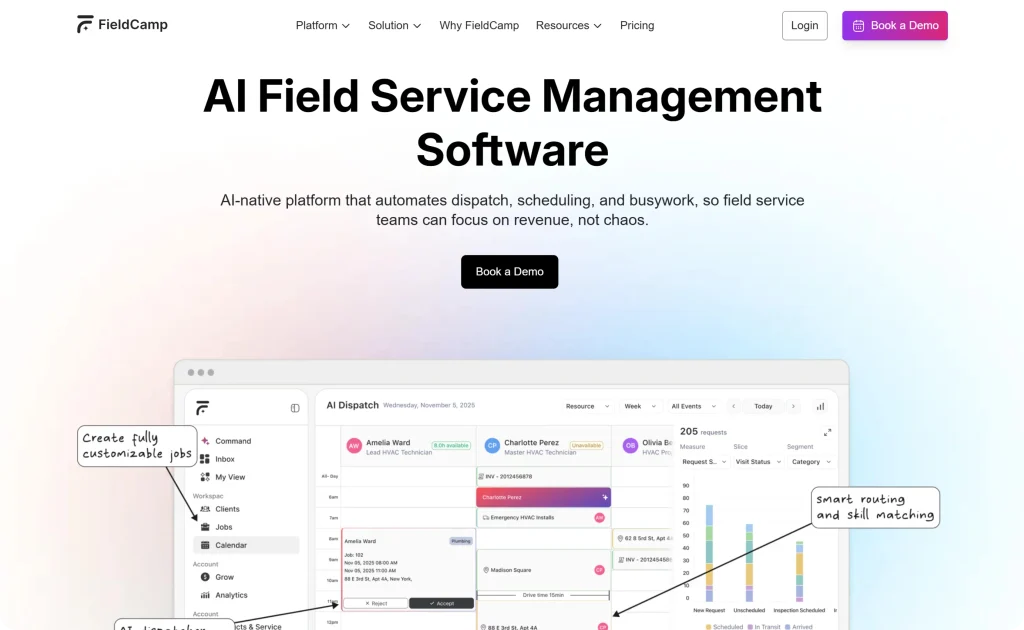
Most dispatching tools assign by proximity: nearest available tech gets the job. FieldCamp’s AI Dispatcher evaluates 10,000+ route combinations per second across 75+ parameters per job — including technician skills, certifications, equipment on the truck, drive time, overtime rules, customer preferences, time windows, revenue impact, and job priority.
That means when a $3,500 commercial HVAC install and a $200 filter change are both open, FieldCamp doesn’t just find the closest tech — it assigns the senior certified tech to the high-value job and routes the junior tech to the maintenance call, while optimizing both routes to minimize windshield time.
When emergencies hit — a tech calls in sick, a customer cancels, traffic reroutes half your board — the AI re-optimizes the entire day’s schedule in seconds. 85% of reroutes need zero dispatcher input. Customers get notified automatically. No phone calls, no scrambling, no whiteboard chaos.
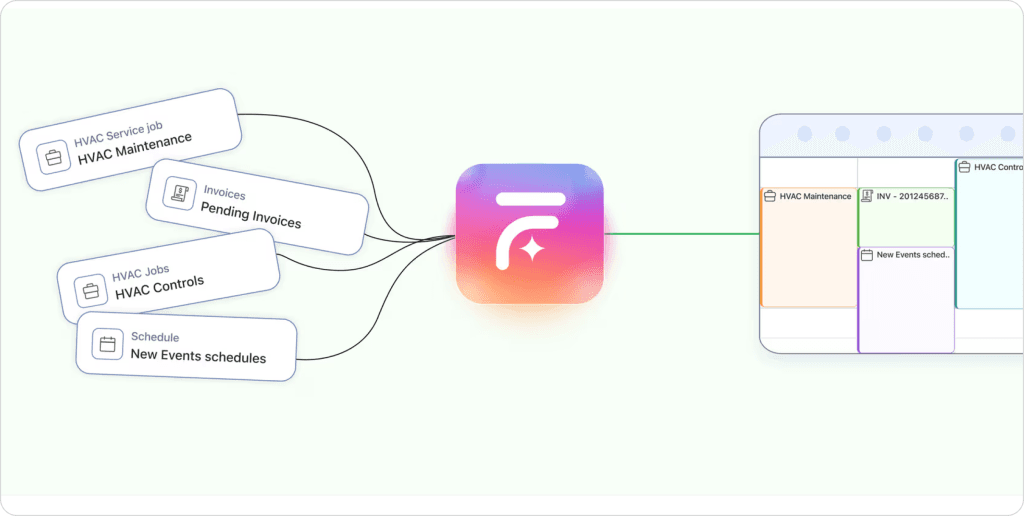
Five optimization modes let you run your dispatch board how you want:
Conversational AI Command Center
This is the feature that makes FieldCamp fundamentally different from every FSM on this list. Instead of navigating dashboards and filling forms, you manage your entire operation through natural language — via Discord, Teams, WhatsApp, SMS, or the FieldCamp app.
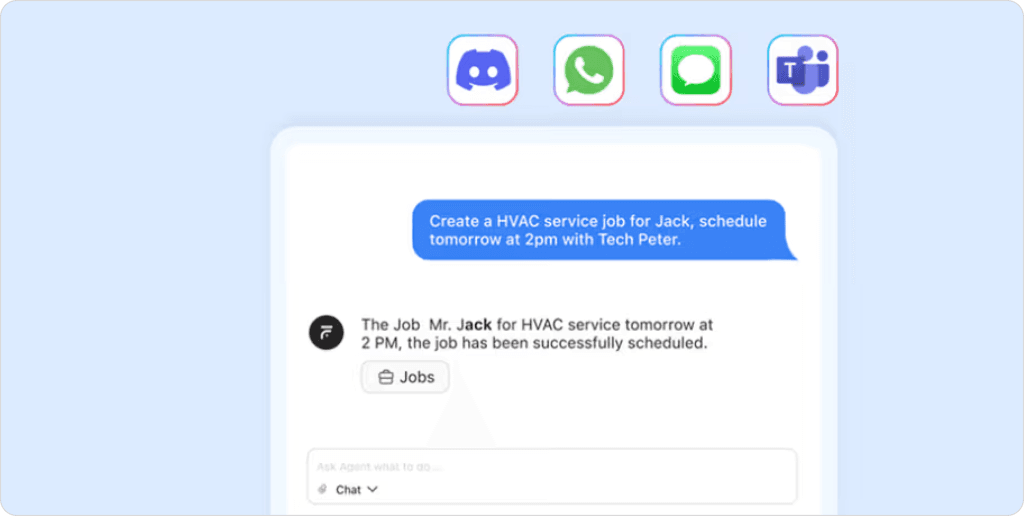
Real AI commands that actually work:
No training manuals. No onboarding sessions. Teams pick it up in 30 minutes because they already know how to text. One home services consultant reported: “The AI command functionality is a game changer. I just type what I need and it happens. No clicking through 15 menus.”
End-to-End Automation Engine
ServiceMax requires manual handoffs between stages. FieldCamp lets you set up automation once and let it run forever:
Every step triggers the next. No copy-pasting between systems. No “I forgot to send the invoice.” No leads sitting in a queue because the office was busy.
AI Receptionist — 99.8% Call Answer Rate
ServiceMax doesn’t answer your phone. FieldCamp does.
The AI Receptionist handles incoming calls, web chats, and SMS messages 24/7 with an average response time under 2 seconds. It books appointments, captures lead information, answers common questions, and sends follow-ups — automatically.
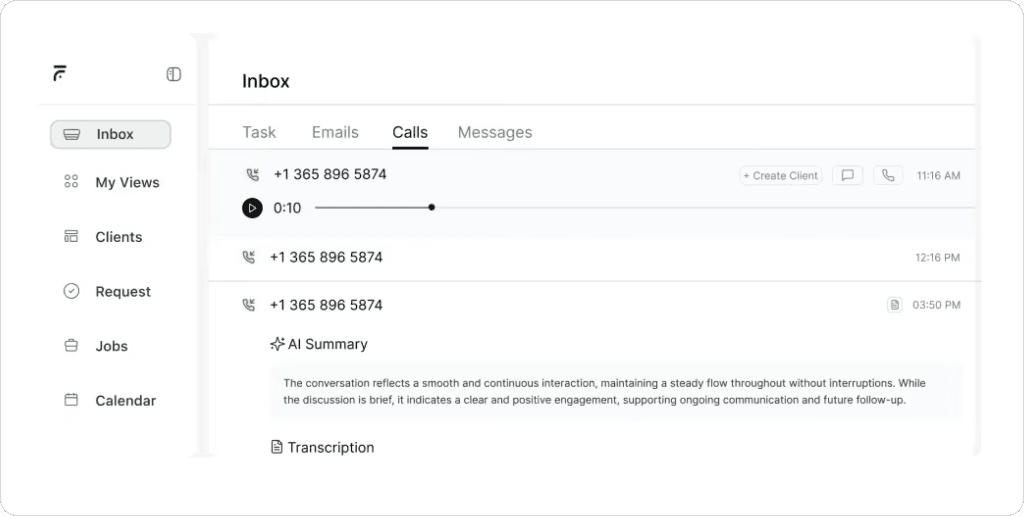
For a service business where a single missed call can mean a lost $2,000+ job, this is the difference between growing and leaking revenue. No more voicemail black holes at 9 PM on a Friday night.
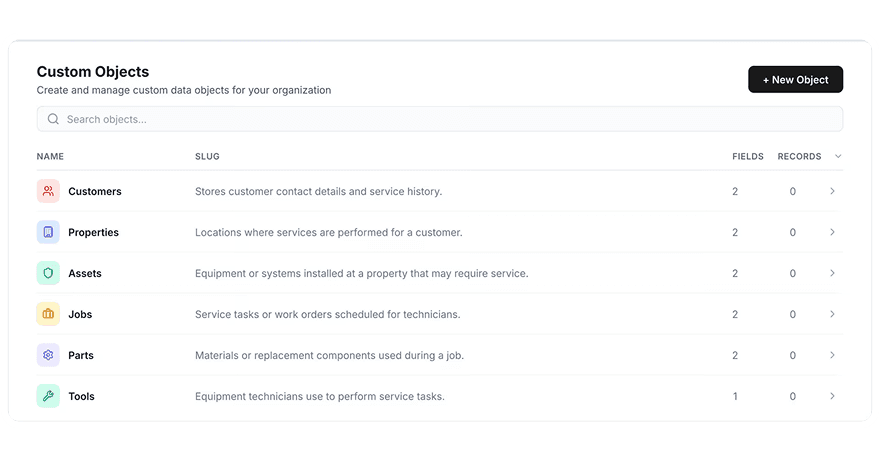
Custom Data Model — Enterprise Depth Without Enterprise Consultants
ServiceMax’s custom configurations require implementation partners and five-figure consulting budgets. FieldCamp gives you the same structural depth with zero code:
AI Document Processing
Technicians don’t fill out paperwork neatly. FieldCamp handles that. Snap photos of site conditions, leave a voice memo, scribble handwritten notes — the AI converts everything into clean, structured service records in seconds. Inspection reports, job summaries, and compliance documentation — all generated automatically from raw field data.
Multi-Day & Specialty Dispatching
For businesses running multi-day projects or specialized operations, FieldCamp handles complexity that basic schedulers can’t:
Integrations
Not an all-or-nothing switch. FieldCamp connects to your existing stack:
| Pros | Cons |
|---|---|
| AI-native architecture — not retrofitted onto legacy software | Newer platform — integration marketplace still growing |
| 10,000+ dispatch combinations/sec across 75+ parameters | Not built for heavy asset lifecycle management (turbines, medical equipment) |
| Conversational AI eliminates training — teams onboard in 30 minutes | Less suited for 200+ tech enterprise deployments with global fleets |
| AI Receptionist catches leads 24/7 (99.8% answer rate) | Fewer industry-specific compliance templates than ServiceMax |
| $25/mo vs. ServiceMax’s $59+/user + implementation fees | |
| Full automation from lead → invoice → payment → review | |
| Works standalone (just dispatcher) or full suite | |
| 30-minute setup, 7-day free trial, no credit card | |
| 4.8/5 stars across 150+ reviews on Capterra |
FieldCamp Pricing Plans:
It offers two products — the full AI field service management suite and a standalone AI Dispatcher you can plug into your existing FSM.
Case Study: Ronnie Pinnell of Tree Rangers Tree Service in Florida chose FieldCamp after asking ChatGPT for the best AI-powered CRM for tree service. “Established platforms like Housecall Pro were retrofitting AI onto decade-old systems, while FieldCamp was purpose-built for the AI era from day one.” His $1M/year tree service now has the documented operations needed for his exit strategy.
ServiceMax vs FieldCamp: Side-by-Side
| Factor | ServiceMax | FieldCamp |
| Target market | Enterprise industrial/asset-centric | Growing home service and field service teams |
| Pricing | $100–$300/user/month (custom quotes) | Free tier available, custom plans starting from $31.99 onwards |
| Implementation | 2–12 months | Hours |
| AI capabilities | Add-on features | Native AI-first architecture |
| Conversational interface | No | Yes (type commands in plain English) |
| Mobile app speed | Slow (per user reviews) | Fast, responsive |
| Best for | 100+ tech industrial operations | 5–50 tech field service businesses |
| Salesforce required? | Yes (for Asset 360) | No |
| Scheduling intelligence | Manual dispatch + some optimization | AI Dispatcher considers 5 factors automatically |
What If Your Field Service Operations Can Run on Chat?
Stop wasting hours on admin work! FieldCamp AI automates everything from job scheduling to follow-ups, simply by conversations.
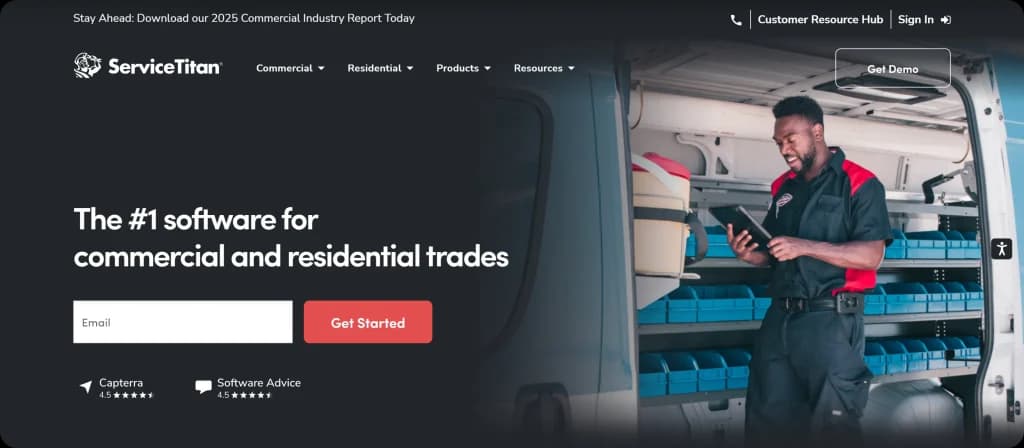
ServiceTitan is the enterprise standard for home services trades. If ServiceMax is too asset-centric for your operation but you need enterprise-grade capabilities for HVAC, plumbing, or electrical, ServiceTitan fills that gap.
Implementation complexity and pricing match the feature depth. That 2-3 month implementation timeline isn’t worst-case – it’s the norm.
What stands out:
Pricing: Custom pricing based on business size. Expect $8,000-15,000+ annually.
| Pros | Cons |
| Most comprehensive home services feature set | Expensive (enterprise pricing) |
| Deep business intelligence and reporting | Newer platform, still building ecosystem |
| Strong marketing and sales tools | Not designed for asset-centric operations |
| Excellent for multi-location operations | |
Quick Verdict: The ServiceMax alternative for enterprise home services. Comprehensive but complex.
Who it’s best for: Large service businesses (25+ techs) with enterprise budgets needing deep analytics and marketing automation.
Who should avoid it: Teams under 20 techs, businesses with budgets under $8K/year, or operations needing quick implementation.
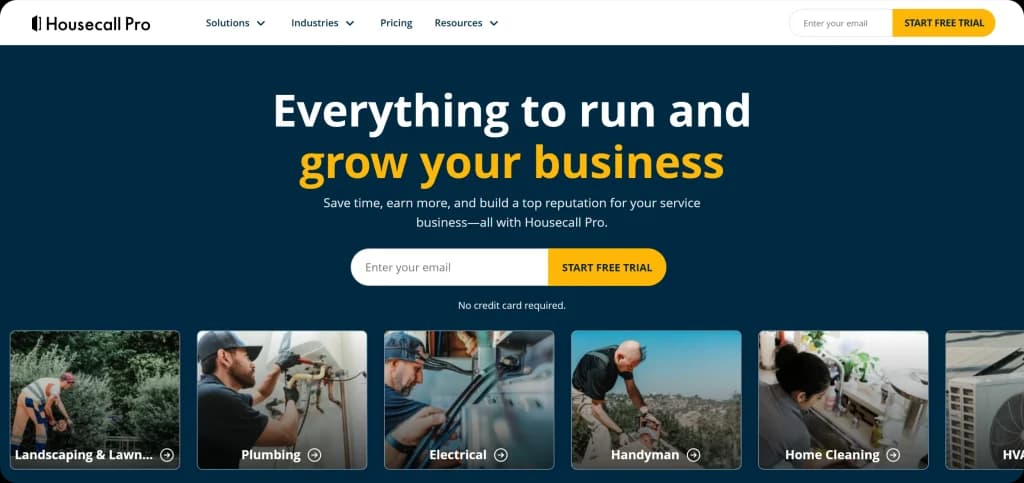
Housecall Pro figured out that residential contractors need marketing help, not just scheduling software. For small teams where ServiceMax is clearly overkill, Housecall Pro delivers the right balance.
It combines operations with customer acquisition – review generation, postcard campaigns, and online booking – in a simple interface.
What stands out:
Pricing: Basic at $79/month, Essentials at $189/month.
| Pros | Cons |
| Marketing + operations combined | No AI dispatching |
| Professional customer portal | Limited workflow automation |
| Much simpler than enterprise tools | Higher tiers for full features |
| Good community and support | Not for commercial operations |
Quick Verdict: Purpose-built for small residential teams. The anti-ServiceMax in the best way.
Who it’s best for: Home service teams (2-10 techs) wanting simpler software with marketing built in.
Who should avoid it: Commercial operations or teams planning to scale beyond 15 techs.
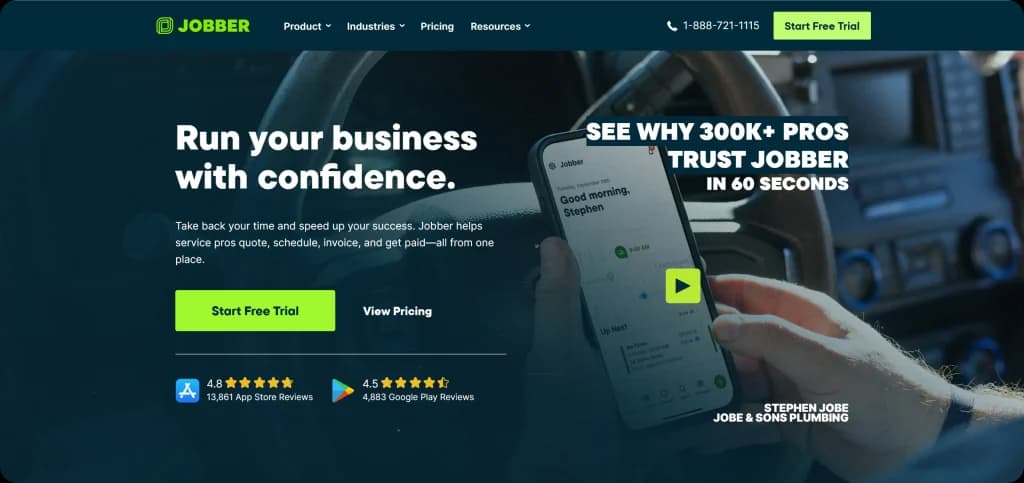
Jobber has built strong brand recognition as the go-to for small field service businesses. It’s the platform many businesses start with before considering enterprise tools like ServiceMax.
Easy to use, quick to implement, with solid mobile apps.
What stands out:
Pricing: Core $28/month, Connect $69/month, Grow $129/month per user.
| Pros | Cons |
| Strong brand recognition and trust | Scheduling is basic – no real AI |
| Very easy to set up | Doesn’t handle complexity well |
| Good customer support | Limited for growth past 15 techs |
| Extensive help documentation | Per-user pricing adds up |
Quick Verdict: Great for getting started. Teams often outgrow it as they scale.
Who it’s best for: Small businesses (2-15 techs) with straightforward scheduling needs.
Who should avoid it: Teams needing AI automation or complex scheduling logic.
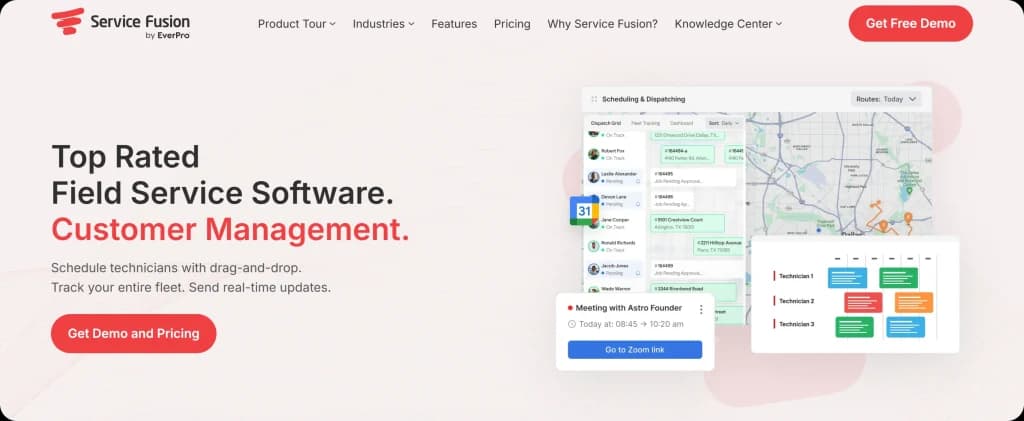
Service Fusion’s headline feature: flat-rate pricing regardless of team size. While ServiceMax and most competitors charge per user, Service Fusion offers unlimited users at each tier.
A 20-person team pays $575/month (~$6,900/year) vs potentially double that with per-user platforms.
What stands out:
Pricing: Starter $225/month, Plus $350/month, Pro $575/month – all unlimited users.
| Pros | Cons |
| Predictable costs at any team size | Dated interface |
| Solid GPS fleet tracking | No AI features |
| Reliable QuickBooks integration | Mobile app needs improvement |
| No long-term contracts required | Steeper learning curve |
Quick Verdict: Best ServiceMax alternative for mid-sized teams wanting comprehensive features with predictable flat-rate pricing.
Who it’s best for: Teams (10-25 techs) who want fleet tracking and full FSM without per-user anxiety.
Who should avoid it: Teams wanting modern UI or AI dispatch capabilities.
If your business lives in QuickBooks, FieldEdge offers the deepest FSM with QuickBooks integration available. Two-way sync handles customers, invoices, and payments automatically.
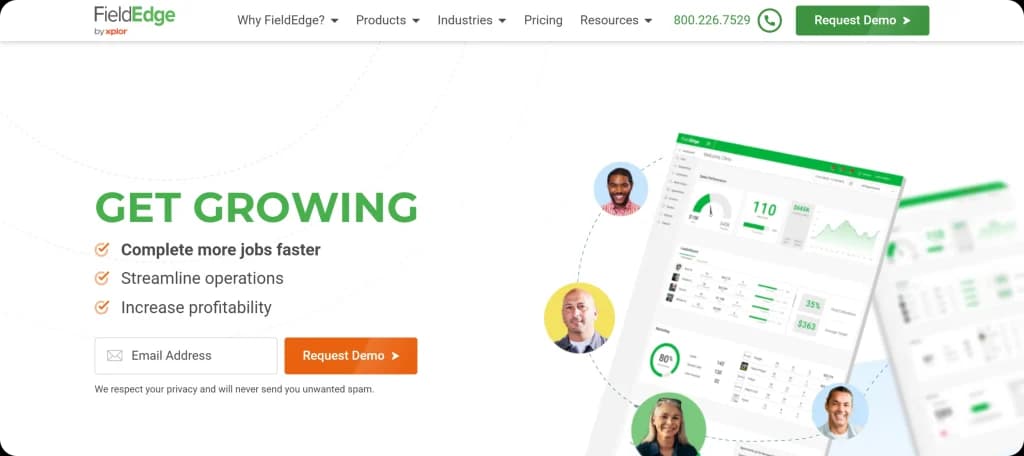
For accounting-driven operations where financial accuracy is paramount, FieldEdge is purpose-built.
What stands out:
Pricing: Not publicly listed. Estimates: ~$100/month per office user + $125/month per technician + setup fees.
| Pros | Cons |
| Best QuickBooks integration available | No transparent pricing |
| Strong pricebook features | Mixed support reviews |
| Good service agreement tracking | Dated interface |
| Established, stable platform | No AI features |
Quick Verdict: Best ServiceMax alternative for QuickBooks-centric operations.
Who it’s best for: Teams (5-20 techs) needing bulletproof QuickBooks sync.
Who should avoid it: Teams wanting transparent pricing or AI dispatch software.
Ready to Switch From ServiceMax?
FieldCamp gives you AI-powered scheduling, dispatching, and CRM without the enterprise price tag or 6-month implementation. Set up in hours, not months.
If you’re already invested in Salesforce, Salesforce Field Service (formerly Field Service Lightning) provides native integration without adding ServiceMax or Asset 360.
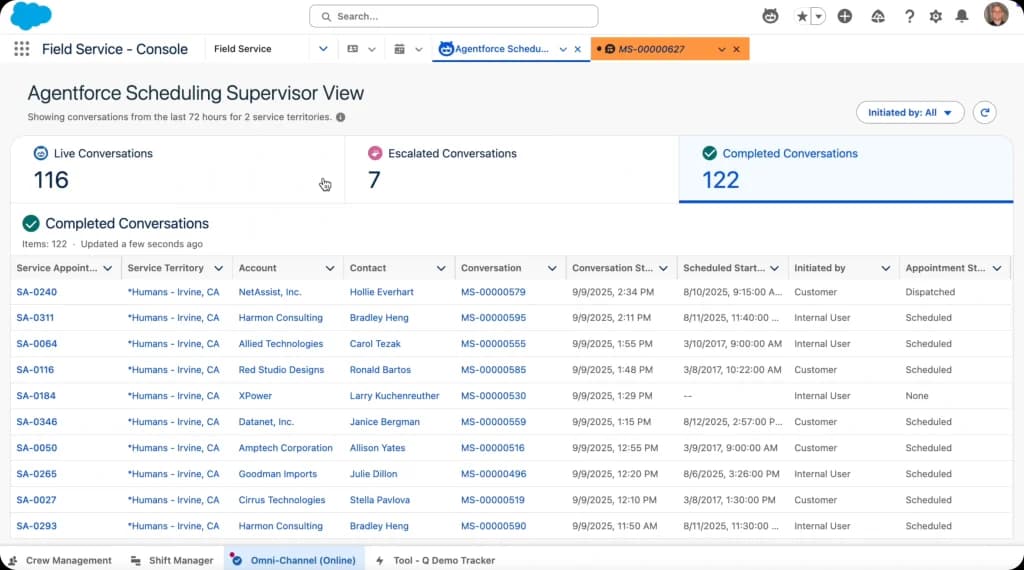
For organizations using Salesforce CRM and Service Cloud, this keeps everything in one ecosystem.
What stands out:
Pricing: Field Service license starts around $150/user/month on top of Salesforce core licensing.
| Pros | Cons |
| Seamless Salesforce integration | Requires existing Salesforce investment |
| Einstein AI capabilities | Complex to configure |
| Highly customizable | Expensive total cost |
| Strong mobile experience | No AI features |
Quick Verdict: The native ServiceMax alternative for Salesforce shops who don’t need Asset 360’s specialized capabilities.
Who it’s best for: Organizations (25+ techs) already using Salesforce CRM needing field service capabilities.
Who should avoid it: Businesses without existing Salesforce infrastructure.
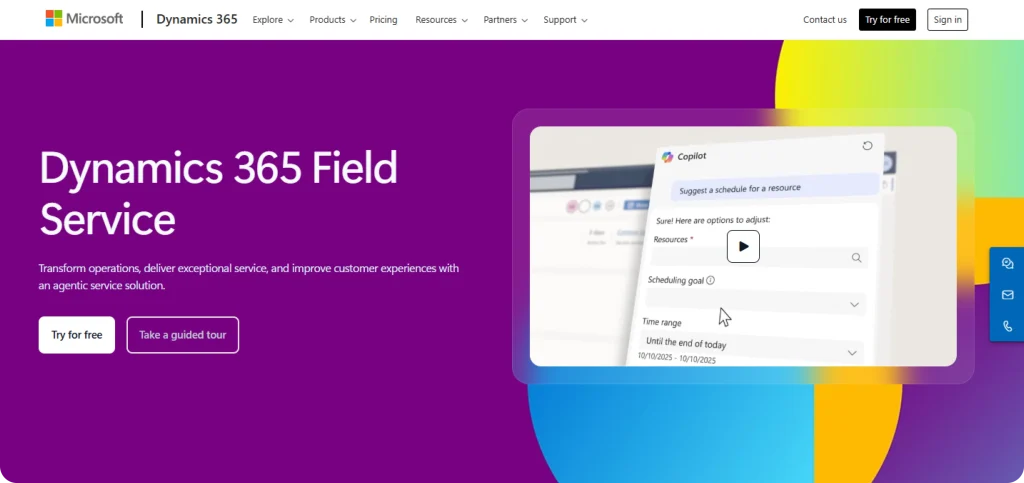
For organizations invested in Microsoft’s ecosystem, Dynamics 365 Field Service provides a natural extension. IoT integration, mixed reality support, and AI-driven scheduling make it a modern alternative to ServiceMax.
What stands out:
Pricing: Starting around $95/user/month.
| Pros | Cons |
| Deep Microsoft integration | Requires Microsoft ecosystem |
| Strong IoT capabilities | Complex implementation |
| Modern AI features | Enterprise-focused pricing |
| Power Platform flexibility | Learning curve for configuration |
Quick Verdict: The enterprise ServiceMax alternative for Microsoft shops.
Who it’s best for: Organizations (25+ techs) already using Dynamics 365 or Microsoft stack.
Who should avoid it: SMBs or non-Microsoft shops.
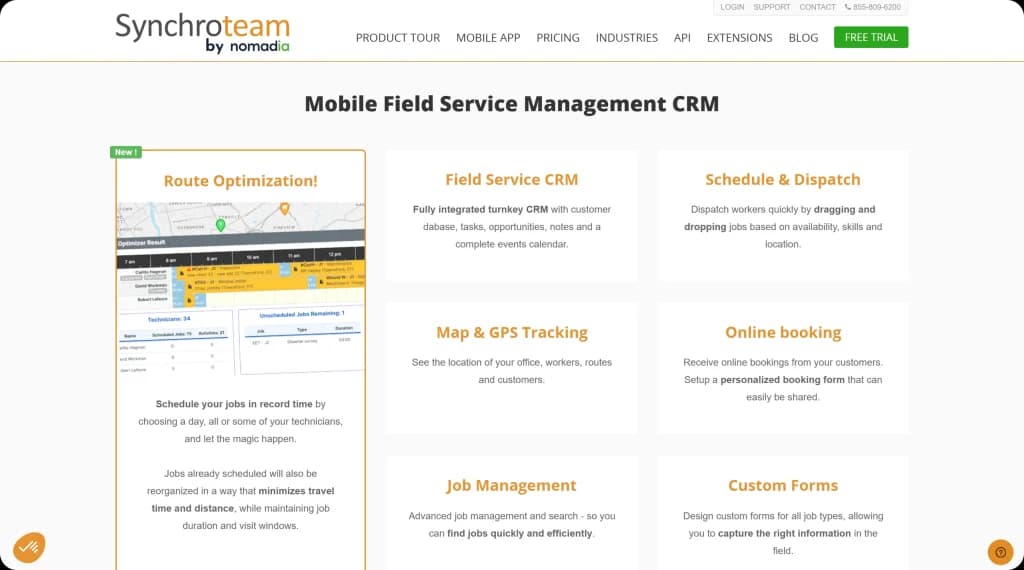
Synchroteam serves field service businesses operating across multiple countries. Multi-language support, multi-currency handling, and flexible pricing make it attractive for international operations.
What stands out:
Pricing: Starting at $22/user/month.
| Pros | Cons |
| True international support | Less polished than competitors |
| Affordable pricing | Limited US-specific features |
| Good GPS tracking | Basic reporting |
| Flexible deployment | Smaller user community |
Quick Verdict: Best ServiceMax alternative for international operations on a budget.
Who it’s best for: Field service businesses (5-20 techs) operating across multiple countries.
Who should avoid it: US-only operations or teams needing advanced features.
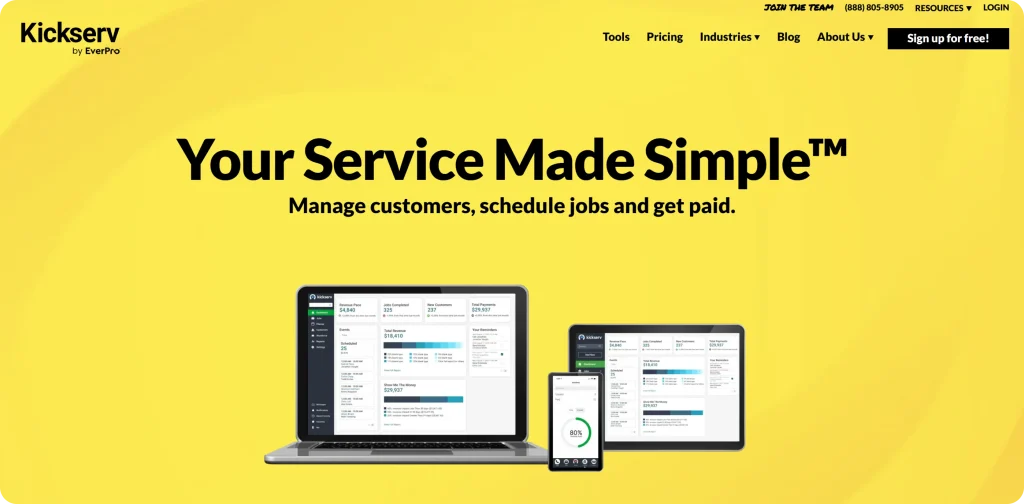
At $19/month, Kickserv is the most affordable ServiceMax alternative for solo operators and startups testing FSM software before committing to pricier platforms.
Basic scheduling, estimates, invoices, and a mobile app. No AI, no deep reporting, just core operations.
What stands out:
Pricing: Flex $19/month, Lite $59/month, Standard $119/month, Business $199/month, Premium $299/month.
| Pros | Cons |
| Much cheaper than ServiceMax | Limited features |
| Easy to learn | No automation |
| Good for testing FSM | Basic reporting |
| No commitment | You’ll outgrow it at 5-8 techs |
Quick Verdict: Cheapest ServiceMax alternative. Basic field service management that works for startups.
Who it’s best for: Startups and solo operators (1-5 techs) who need affordable FSM to get started.
Who should avoid it: Teams planning growth or needing automation.
Pricing: Starting from $29/month | Unlimited users on most plans
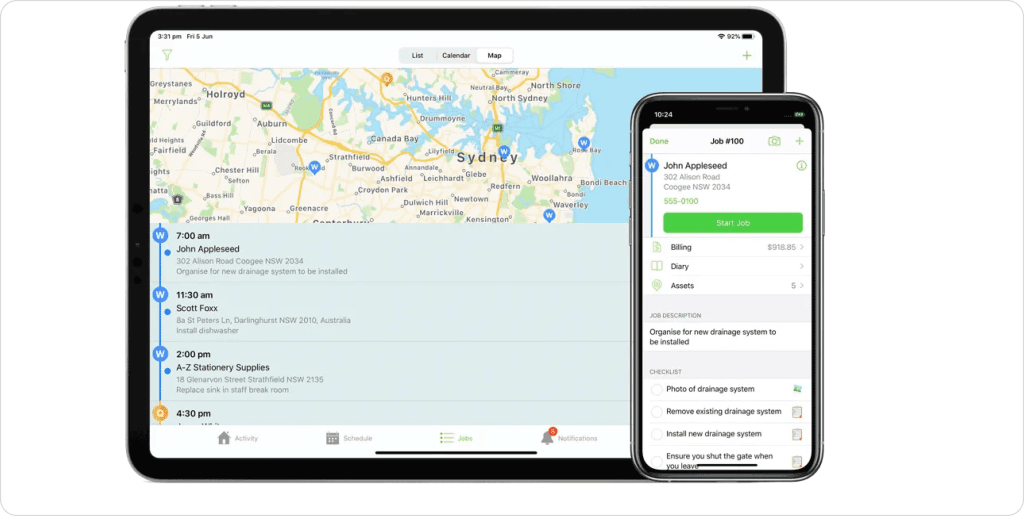
ServiceM8 delivers the best offline mobile experience among ServiceMax competitors. For technicians working in basements, rural areas, or underground spaces where ServiceMax’s app struggles, ServiceM8 keeps working.
| Pros | Cons |
| Excellent offline capabilities | More popular in Australia/UK than US |
| Unlimited users | Basic reporting |
| Transparent pricing | Smaller US user community |
| Strong mobile apps | Limited US-specific features |
Small mobile-first teams (2–15 techs) who need reliable offline functionality and transparent pricing. For teams that also need online booking, FieldCamp provides automatic service area validation alongside offline-capable mobile apps.
Pricing: Starting from $65/user/month (subscription)
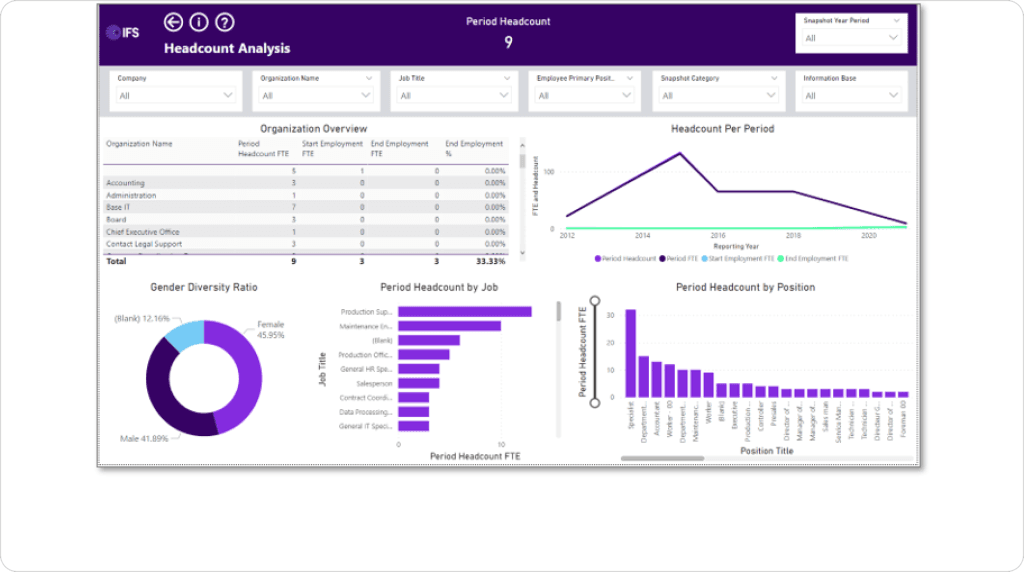
IFS is the closest direct enterprise competitor to ServiceMax. For organizations in aerospace, defense, energy, or heavy manufacturing that genuinely need asset-centric field service, IFS provides comparable depth with better ERP integration.
| Pros | Cons |
| Unmatched depth in parts logistics | Complex onboarding |
| Strong warranty claim management | Enterprise pricing |
| Flexible deployment options | Requires significant IT resources |
| “Swiss Army knife” approach with ERP | Not suitable for SMBs |
Large enterprises (25+ techs) in asset-intensive industries (aerospace, defense, energy) that need ServiceMax-level depth with better ERP capabilities.
Pricing: Lite Free (2 users) | Kickstart $225/month (3 users) | Standard $275/month (5 users) | Pro $325/month (5 users)
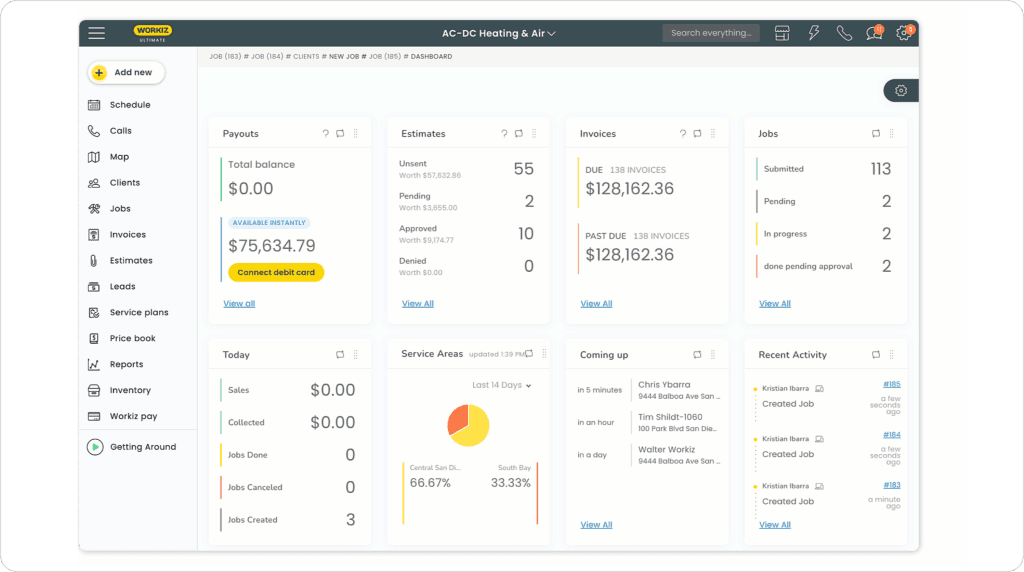
Workiz shines for service businesses where lead conversion drives growth. Built-in call tracking, smart call routing, and automated lead-to-job conversion set it apart from scheduling-focused competitors.
| Pros | Cons |
| Strong lead management and call tracking | Paid plans start at $225/month |
| Good automation features | Limited to 3–5 users on lower plans |
| Genius AI for call insights | Less established than Jobber/Housecall Pro |
| Free tier available (2 users) |
Lead-focused service businesses (5–20 techs) in locksmith, garage door, HVAC, and plumbing where call management drives revenue. See our Jobber vs Workiz comparison if you’re deciding between these two.
AI-Powered Field Service, Simplified
Eliminate inefficiencies and enhance field service productivity with automation. See how FieldCamp replaces ServiceMax complexity with conversational AI.
| Feature | FieldCamp | Jobber | Housecall Pro | ServiceTitan | Service Fusion |
| AI-Powered Scheduling | Full | No | No | Limited | No |
| Conversational Interface | Yes | No | No | No | No |
| Equipment Scheduling | Yes | No | No | Yes | No |
| Skills Matching | Auto | Manual | Manual | Yes | Manual |
| Multi-Day Jobs | Yes | No | No | Yes | Limited |
| Route Optimization | Built-in | Add-on | Yes | Yes | Yes |
| CRM | Yes | Yes | Yes | Yes | Yes |
| Invoicing | Yes | Yes | Yes | Yes | Yes |
| QuickBooks Integration | Yes | Yes | Yes | Yes | Yes |
| Online Booking | Yes | Yes | Yes | Yes | Yes |
| Mobile App | Yes | Yes | Yes | Yes | Yes |
| Ask Business Questions (AI) | Yes | No | No | No | No |
| Starting Price | $31.99 onwards | $39/mo | $59/mo | $245/tech/mo | $208/mo |
Pro Tip: Use our free estimate template and invoice templates to standardize your quoting and billing process while you evaluate which platform fits your team best.
If you’re evaluating ServiceMax alternatives because you want modern AI capabilities without enterprise complexity, you’re looking in the right direction.
The field service management market is shifting. 78% of high-performing organizations already use AI to improve service outcomes. Businesses that leverage AI-powered scheduling, intelligent dispatching, and workflow automation report significant efficiency gains.
Consider what HeyMaid founder Sam discovered when launching his cleaning business: “I’ve been looking at tons of field service software – Jobber, Housecall Pro, Service Fusion, whatever. It was so refreshing to see FieldCamp. It wasn’t built 15 years ago and just had minor updates packed into it over time. You can tell it was built on top of AI, not the other way around.”
With FieldCamp, you get:
Still stuck with one-size-fits-all field service software?
Time to switch to an AI-first field service software that adapts to you.
No, ServiceMax is not part of Salesforce, but it has a strong integration with Salesforce through ServiceMax Asset 360.
Originally, ServiceMax was an independent field service management (FSM) software provider. It was acquired by PTC in 2022. However, ServiceMax Asset 360 is a field service management solution built on Salesforce and is available through the Salesforce AppExchange.
So, while ServiceMax is not owned by Salesforce, it does have a deep integration with Salesforce Field Service (SFS) to provide end-to-end asset service management and field service automation.
Yes, based on the data derived from the Glassdoor web page, ServiceMax has an average rating of 4.2 out of 5, based on over 208 anonymous employee reviews. Two-thirds of employees would recommend ServiceMax as a workplace to friends, and 66% feel optimistic about the company’s future. These ratings have remained consistent over the last year.
Because of the increasing demand for asset life cycle management solutions, PTC announced its decision to acquire ServiceMax on November 17, 2022. The agreement, valued at $1.46 billion, sees PTC purchasing ServiceMax from Silver Lake, a private equity firm.
This acquisition underscores the growing importance of tools that effectively manage assets throughout their entire life cycle, highlighting PTC’s commitment to enhancing its offerings in this space.
ServiceMax is a comprehensive field service management (FSM) solution designed to support and optimize field service operations across various industries. It is particularly well-suited for businesses that rely on managing complex assets visibility, equipment, and workflows in the field.