
Cleaning Business Startup Costs: Complete 2026 Breakdown
February 22, 2026 - 21 min read


February 22, 2026 - 21 min read

Table of Contents
| TL;DR: Most US cleaning businesses cost between $2,000 and $10,000 to start, depending on whether you choose residential or commercial services. Core expenses include equipment ($300-$2,000), licenses ($100-$500), insurance ($500-$1,500/year), and marketing ($300-$1,000). Solo operators can launch for under $2,000, while commercial setups may exceed $15,000. |
Starting a cleaning business in 2026 is one of the fastest ways to enter a $110+ billion industry; but most new owners underestimate what it truly costs to launch and run it properly. It’s not just mops and vacuums. Licenses, insurance, marketing, vehicles, and the right systems all impact your startup budget.
In this complete breakdown, we’ll walk through real cleaning business startup costs, from lean solo launches under $2,000 to fully equipped commercial operations exceeding $15,000. You’ll also learn where new owners overspend, where you should never cut corners, and how smart planning can reduce costs by up to 60%.
And just as important as what you spend is how you manage it. Using dedicated cleaning business software from day one helps you control scheduling, invoicing, route planning, and client communication; preventing costly mistakes that slow growth before it even starts.
Let’s break down exactly what it takes to launch the right way.
KEY HIGHLIGHTS
Check Cleaning Business Startup Costs in 2026
Cleaning business startup costs range from as little as $500 for a bare-bones solo operation to $50,000 or more for a fully equipped commercial cleaning company. Most small cleaning businesses in the US spend between $2,000 and $10,000 to get up and running, with the average falling around $3,500 to $6,000 for a properly licensed and insured operation.
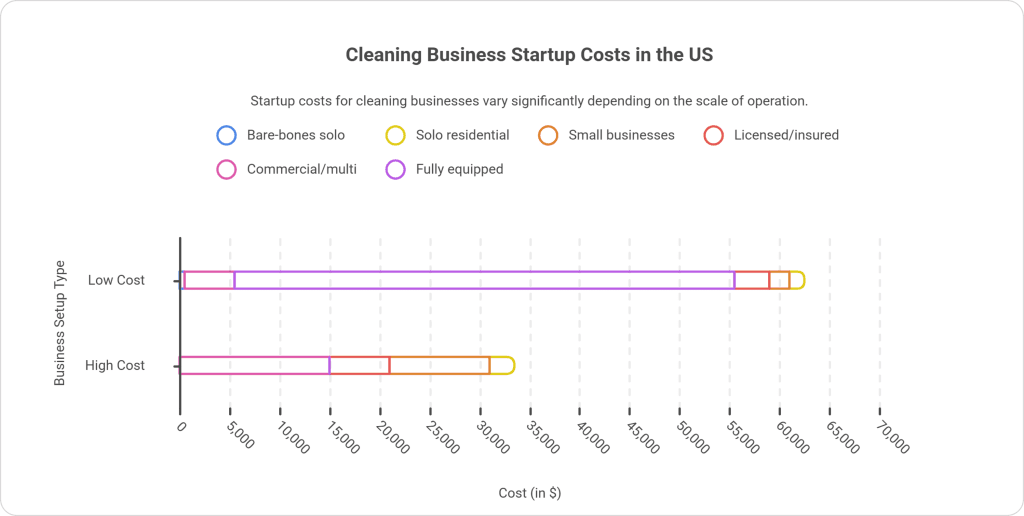
Quick Stat: The US cleaning services industry is projected to grow from USD 481.75 billion in 2026 to USD 859.20 billion by 2034, exhibiting a CAGR of 7.50% during the forecast period. For more data on where the industry is headed, check out the latest cleaning industry trends and statistics.
You can also listen to our podcast to get an overall gist of how much to spend while starting up a cleaning business.
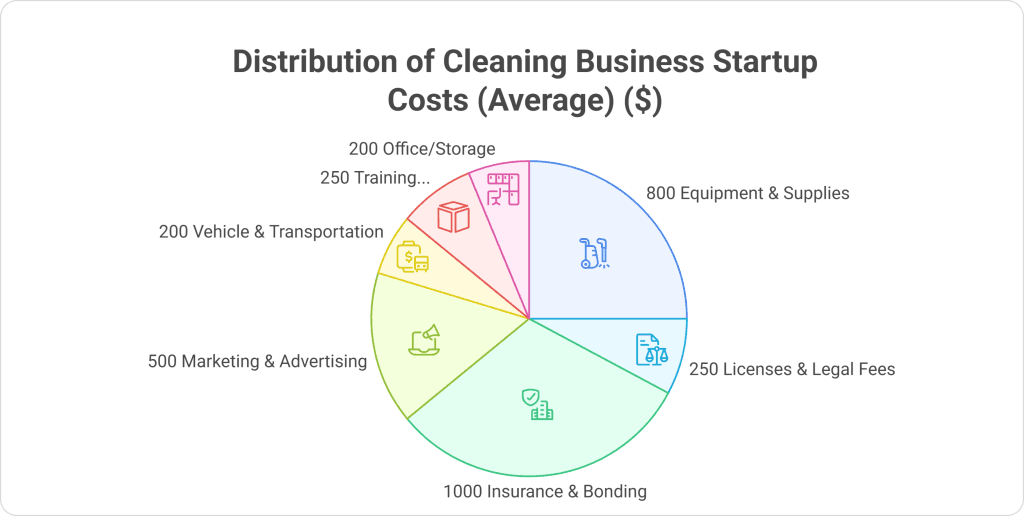
Every cleaning business has different startup costs depending on the services offered, location, and business model. Here is a comprehensive breakdown of what you should budget for when planning your cleaning business startup costs.
| Expense Category | Low Estimate | Average | High Estimate |
|---|---|---|---|
| Equipment & Supplies | $300 | $800 | $2,000+ |
| Licenses & Legal Fees | $50 | $250 | $500+ |
| Insurance & Bonding | $500/yr | $1,000/yr | $2,500+/yr |
| Marketing & Advertising | $100 | $500 | $2,500 |
| Vehicle & Transportation | $0 (personal car) | $200/mo | $38,000+ (new van) |
| Software & Technology | $0 (free tools) | $50/mo | $250+/mo |
| Training | $0 (self-taught) | $200 | $1,000+ |
| Office/Storage Space | $0 (home-based) | $200/mo | $1,500+/mo |
| Total Year-One Estimate | $1,200 | $5,500 | $15,000+ |
Heads Up: The above mentioned cost ranges are based on typical figures reported across multiple cleaning industry guides and insurance providers, including Aspire’s startup cost breakdown, ZenBusiness’s cleaning business cost guide, and cleaning insurance benchmarks from Insurance Canopy, MoneyGeek, and similar small‑business resources.
Basic cleaning equipment costs between $300 and $900 for residential cleaning and $1,000 to $3,300 for commercial operations. Your equipment list depends entirely on whether you are cleaning houses or office buildings, and whether you offer specialized services like carpet or window cleaning. Not sure which service model is right for you? Browse our roundup of cleaning business ideas to find a niche that matches your budget and skills.
Here is what a standard residential cleaning startup kit looks like:
| Item | Estimated Cost |
|---|---|
| Commercial-grade vacuum | $200-$400 |
| Mop and bucket set | $30-$60 |
| Microfiber cloths (bulk) | $15-$30 |
| Cleaning solutions (all-purpose, glass, bathroom) | $30-$60 |
| Broom and dustpan | $15-$25 |
| Spray bottles and caddy | $20-$35 |
| Rubber gloves (bulk) | $10-$20 |
| PPE (masks, goggles) | $15-$30 |
| Dusting tools and extension poles | $20-$40 |
| Total Residential Kit | $355-$700 |
For commercial cleaning, add floor scrubbers ($500-$2,000), commercial-grade vacuum systems ($400-$800), and specialized equipment like carpet extractors ($1,500-$5,000).
Pro Tip: Start with residential-grade equipment and upgrade as revenue grows. A $200 vacuum handles the first 20-30 clients just fine. Invest your savings in marketing instead, because the best vacuum in the world does nothing if you have no customers to use it on.
The monthly cost of replenishing cleaning supplies typically runs $50 to $200, depending on client volume. Buying in bulk from janitorial wholesalers instead of retail stores can cut supply costs by 25-40%.
Warning: Do not skip PPE. Cleaning chemicals can cause skin irritation and respiratory issues. Budget $30-$50 for gloves, masks, and goggles. It protects you and shows clients you take the work seriously.
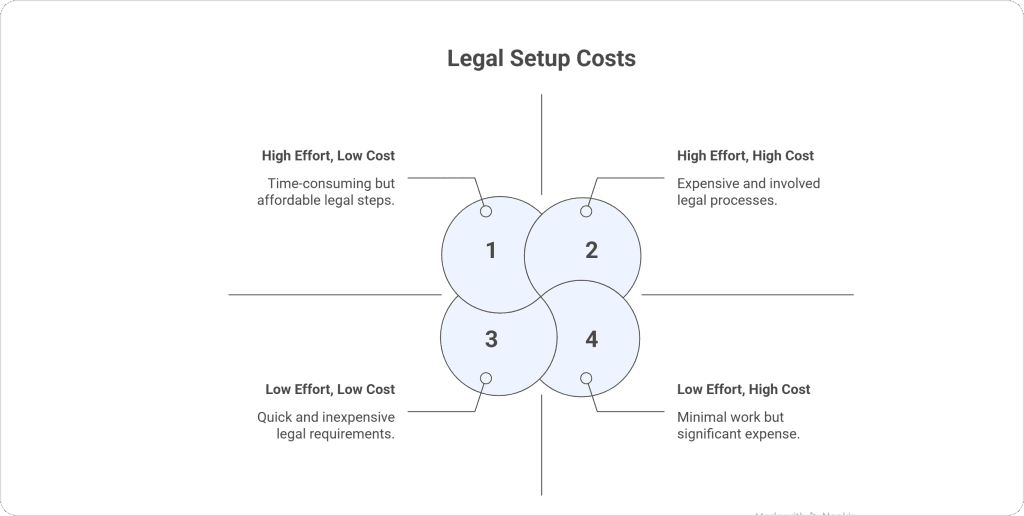
Getting your cleaning business legally registered typically costs between $100 and $500, depending on your state and business structure. This is one of the most straightforward cleaning business startup costs, but skipping it can result in fines that far exceed the registration fee.
Here is what you need:
| Requirement | Typical Cost | Notes |
|---|---|---|
| Business Registration (Sole Prop) | $0-$50 | Varies by state |
| LLC Formation | $50-$500 | Recommended for liability protection |
| DBA (Doing Business As) | $10-$100 | Required if using a trade name |
| Business License | $50-$400 | Varies by city/county |
| Seller’s Permit | $0-$25 | Required in some states |
| Total Legal Setup | $100-$500 |
Pro Tip: Form an LLC rather than operating as a sole proprietor. The extra $50-$300 creates a legal separation between your personal assets and your business. If a client sues because you accidentally damaged a $5,000 rug, your personal savings stay protected.
Most states require a general business license at minimum. Some cities and counties have additional permit requirements. Check with your local Secretary of State office and city hall before spending money on equipment. For detailed licensing requirements, read our guide on cleaning business license requirements.
For help managing client contracts and job documentation, digital checklists and forms keep everything organized from the start.
Insurance is the expense most new cleaning business owners underestimate. General liability insurance for a small cleaning company costs between $500 and $1,500 per year, or roughly $40 to $125 per month. This is non-negotiable. Most residential and commercial clients will not hire an uninsured cleaner.
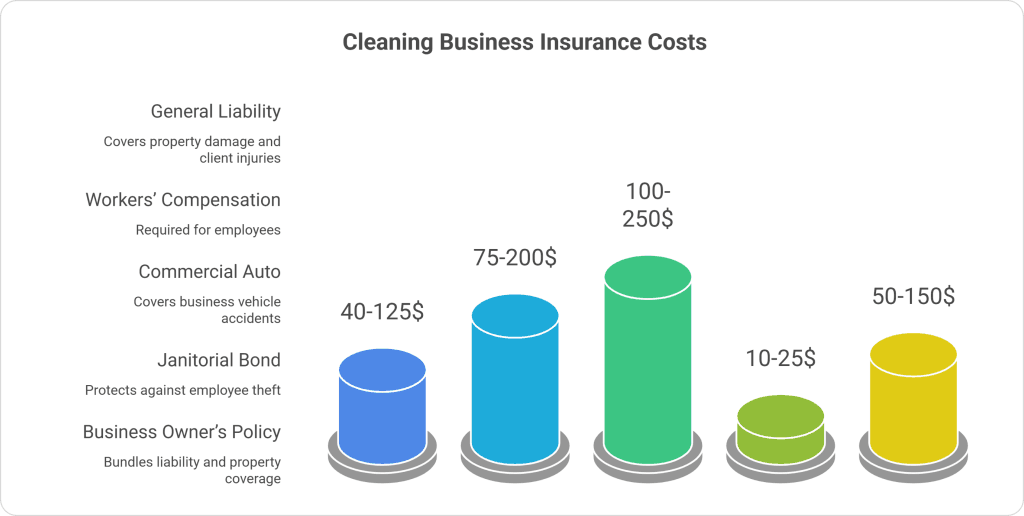
Here is a breakdown of insurance types and costs:
| Insurance Type | Monthly Cost | Annual Cost | Why You Need It |
|---|---|---|---|
| General Liability | $40-$125 | $500-$1,500 | Covers property damage, client injuries |
| Workers’ Compensation | $75-$200 | $900-$2,400 | Required if you have employees |
| Commercial Auto | $100-$250 | $1,200-$3,000 | Covers business vehicle accidents |
| Janitorial Bond | $10-$25 | $100-$300 | Protects against employee theft |
| Business Owner’s Policy (BOP) | $50-$150 | $600-$1,800 | Bundles liability + property |
Key Takeaway: Start with general liability insurance at minimum ($500-$1,000/year for a solo cleaner). Add workers’ compensation when you hire your first employee. A janitorial bond is inexpensive and gives clients peace of mind, making it easier to win new business.
Several guides emphasize that the real cost driver is not mops and vacuums, but decisions like whether you hire staff, lease vehicles, or take on large commercial contracts from day one. Insurance costs scale directly with those decisions.
Pro Tip: Shop quotes from at least three insurance providers. Online brokers like Insureon let you compare policies in minutes. Bundling general liability and property insurance into a Business Owner’s Policy (BOP) often saves 15-20% compared to buying policies separately.
Marketing costs for a new cleaning business range from $100 (DIY approach) to $2,500 or more (professional branding and paid ads). Industry guidelines suggest reserving 8% of projected annual revenue for marketing and advertising. For a deep dive into strategies that work on every budget, read our full guide on how to market a cleaning business.
Here is a realistic marketing budget for a new cleaning business:
| Marketing Channel | Startup Cost | Monthly Ongoing |
|---|---|---|
| Google Business Profile | Free | Free |
| Basic Website (DIY builder) | $0-$200 | $15-$30/mo |
| Business Cards (500 count) | $20-$50 | N/A |
| Door Hangers / Flyers | $50-$150 | $50-$100/mo |
| Logo Design | $50-$300 | N/A |
| Google Ads (Local) | N/A | $200-$500/mo |
| Social Media (Facebook/Instagram) | Free | Free-$200/mo |
| Vehicle Magnet/Wrap | $50-$500 | N/A |
| Uniforms (branded shirts) | $50-$150 | N/A |
Pro Tip: Your Google Business Profile is free and often generates more leads than any paid channel in your first year. Set it up immediately, collect reviews from your earliest clients, and post weekly updates. Cleaning businesses with 15 or more Google reviews typically rank in the local map pack, driving consistent inbound calls.
To maximize your visibility in local search results, our guide on SEO for cleaning businesses covers keyword strategy, on-page optimization, and review management.
With more than 875,000 cleaning companies operating in the US, differentiation matters. Your marketing does not need to be expensive, but it does need to be consistent. For more strategies on attracting customers, check out our complete guide on how to get clients for your cleaning business.
For managing incoming leads and converting them into booked jobs, a field service CRM tracks every prospect so none fall through the cracks.
Transportation is one of the most variable cleaning business startup costs. You can start with your personal car for $0 upfront, or invest $24,000 to $43,000 in a dedicated work vehicle.
| Option | Upfront Cost | Monthly Cost | Best For |
|---|---|---|---|
| Personal Car | $0 | Gas + mileage ($150-$300/mo) | Solo startups |
| Used Van (purchased) | $15,000-$25,000 | Gas + maintenance ($200-$400/mo) | Small teams |
| New Van (purchased) | $30,000-$43,000 | Gas + maintenance ($250-$450/mo) | Established businesses |
| Leased Vehicle | $0-$3,000 down | $300-$600/mo | Building brand image |
Pro Tip: Use your personal car until you are consistently booking 15 or more jobs per week. Track every mile with a free app for tax deductions. The IRS standard mileage rate for 2026 is $0.70 per mile, which adds up fast. A cleaner driving 100 miles per week saves over $3,600 annually in tax deductions.
When you do upgrade to a dedicated vehicle, AI-powered route optimization reduces drive time by grouping jobs geographically. This saves fuel, reduces vehicle wear, and lets you fit more jobs into each day.
Field service software costs between $0 (free tools) and $250 or more per month depending on features and team size. The right software pays for itself by eliminating scheduling mistakes, speeding up invoicing, and reducing missed appointments. If scheduling is your biggest pain point, our comparison of the best cleaning schedule apps can help you find the right fit.
| Software Type | Free Option | Paid Option |
|---|---|---|
| Scheduling & Dispatch | Google Calendar | $29-$129/mo (FSM software) |
| Invoicing | Wave, free templates | $15-$50/mo |
| CRM / Client Management | Google Sheets | $25-$100/mo |
| Accounting | Wave | QuickBooks ($30/mo) |
| Route Planning | Google Maps | AI route optimization (included in FSM) |
| All-in-One FSM Platform | N/A | $29-$250/mo |
Key Takeaway: Using separate tools for scheduling, invoicing, CRM, and routing quickly adds up to $150 or more per month, and creates data silos that slow you down. An all-in-one field service management platform consolidates everything into one system, often costing less than the combined price of individual tools. Businesses that embrace AI-powered cleaning service tools early tend to scale faster by automating the admin work that bogs down most operators.
For creating professional invoices from day one, use a free cleaning invoice template to keep things polished without spending a dime.
Need estimates for potential clients? A free cleaning estimate template helps you quote jobs accurately and consistently.
Stop Juggling Spreadsheets and Sticky Notes
You are building a cleaning business, not an admin empire. FieldCamp brings scheduling, invoicing, client management, and route optimization into one AI-powered platform built for field service businesses like yours.
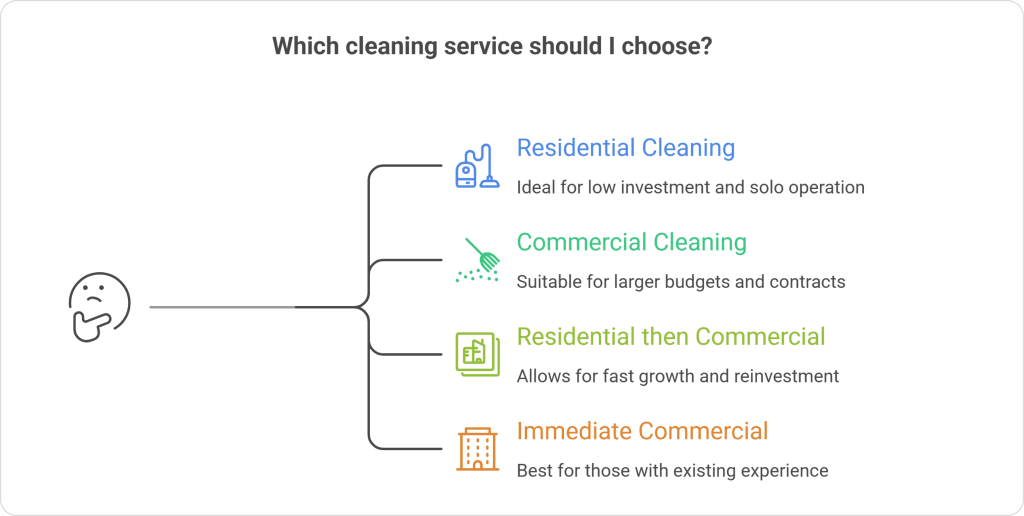
Your startup costs change significantly depending on whether you pursue residential or commercial cleaning. Understanding the different types of cleaning services available will help you pick the right model for your budget and goals. Here is a side-by-side comparison:
| Factor | Residential Cleaning | Commercial Cleaning |
|---|---|---|
| Typical Startup Cost | $1,500-$5,000 | $5,000-$15,000+ |
| Equipment Needed | Basic vacuums, mops, solutions | Industrial floor scrubbers, buffers |
| Insurance Cost | $500-$1,000/yr | $1,500-$3,000+/yr |
| Revenue Per Client | $100-$300/visit | $500-$5,000+/mo (contracts) |
| Client Acquisition | Marketing, referrals | Networking, bidding |
| Competition Level | High (more entrants) | Moderate (higher barrier) |
| Profit Margins | 10-15% | 15-28% |
| Payment Speed | Same-day or weekly | Net 30-60 days |
Pro Tip: Most successful cleaning companies start residential and add commercial clients once they have systems in place. Residential cleaning builds cash flow fast (clients pay immediately), while commercial contracts provide stability (recurring monthly revenue). The ideal business eventually has both. For a roadmap on scaling beyond your first handful of clients, read our guide on how to grow a cleaning business.
| If this describes you… | Consider this |
|---|---|
| Under $2,000 to invest, working solo | Start with residential cleaning |
| $5,000+ budget, want larger contracts | Go directly to commercial cleaning |
| Want to build fast and reinvest profits | Start residential, add commercial in 6-12 months |
| Have commercial cleaning experience | Leverage experience for commercial contracts |
Specialized cleaning services like carpet cleaning ($5,000-$25,000 startup), window cleaning ($2,000-$10,000), and pressure washing ($3,000-$15,000) offer higher profit margins but require more specialized equipment. If you’re considering window cleaning as a niche, our pricing guide on how to charge for window cleaning breaks down exactly what to charge. Similarly, adding gutter cleaning as an upsell can boost revenue — learn the going rates in our guide on how much to charge for gutter cleaning.
Here are three realistic startup budgets based on different business models. Use these as templates when planning your own cleaning business startup costs.
| Expense | Cost |
|---|---|
| Basic cleaning kit (vacuum, mop, supplies) | $400 |
| LLC formation | $150 |
| Business license | $100 |
| General liability insurance (annual) | $600 |
| Google Business Profile + DIY website | $50 |
| Business cards + flyers | $75 |
| Free scheduling/invoicing tools | $0 |
| Total | $1,375-$2,000 |
This budget works perfectly for solo operators who want to test the market before scaling.
| Expense | Cost |
|---|---|
| Equipment (2 cleaning kits) | $1,000 |
| LLC formation + legal | $300 |
| Business license + permits | $200 |
| General liability + workers’ comp | $2,000 |
| Janitorial bond | $150 |
| Website (professional) | $500 |
| Marketing (cards, flyers, Google Ads) | $750 |
| Branded uniforms + vehicle magnet | $300 |
| FSM software (3 months) | $150 |
| Total | $5,350-$7,500 |
| Expense | Cost |
|---|---|
| Commercial equipment (floor scrubber, industrial vacuum, supplies) | $4,000 |
| LLC + legal consultation | $500 |
| Business license + permits | $300 |
| Full insurance package (liability + auto + workers’ comp) | $4,000 |
| Company vehicle (used van, down payment) | $3,000 |
| Professional website + branding | $1,000 |
| Marketing + networking | $1,500 |
| FSM software (annual) | $600 |
| Training and certifications | $500 |
| Total | $15,400-$20,000 |
Key Takeaway: Budget A proves you can launch a legitimate cleaning business for under $2,000. Budget B is where most first-year cleaning businesses land. Budget C is for operators who already have experience and want to compete for commercial contracts immediately.
You can lower your initial investment by 40-60% with these strategies. Multiple planning guides call cleaning one of the more affordable home-service businesses to enter, mainly because you can start with simple tools and upgrade over time.
[Download PDF Version]
Step 1: Register LLC + get insurance (non-negotiable) → Step 2: Buy basic equipment only ($400 max) → Step 3: Set up free Google Business Profile + DIY website → Step 4: Land first 5 clients through personal network + flyers → Step 5: Reinvest first month’s revenue into marketing → Result: Operating, insured, and growing for under $2,000
Pro Tip: Do not buy a company vehicle, fancy uniforms, or expensive software until you have at least 10 recurring clients. Every dollar spent before revenue starts flowing is a dollar of pure risk. Successful cleaning business owners invest in revenue-generating activities (marketing, insurance that wins client trust) first, and operational upgrades second.
Understanding your recurring expenses is just as important as knowing your startup costs. Here is what to expect after your cleaning business is up and running:
| Monthly Expense | Solo Operator | Small Team (2-3 people) |
|---|---|---|
| Cleaning supplies | $50-$100 | $150-$300 |
| Gas / transportation | $150-$300 | $300-$600 |
| Insurance (monthly portion) | $40-$80 | $150-$300 |
| Marketing | $50-$200 | $200-$500 |
| Software | $0-$50 | $50-$150 |
| Phone / communication | $50-$100 | $100-$200 |
| Employee wages | $0 | $2,000-$6,000+ |
| Total Monthly | $340-$830 | $2,950-$8,050 |
Pro Tip: Track every expense from day one. Use a field service reporting dashboard to monitor job profitability, track costs per client, and identify where money is leaking. Cleaning businesses that track their numbers consistently earn 20-30% more than those that guess.
Knowing your monthly operating costs helps you price services correctly. At minimum, your hourly rate should cover all monthly expenses plus a 20-30% profit margin. Use a free labor cost calculator to determine your break-even rate.
For a complete breakdown of what to charge, read our guide on how to charge for cleaning services.
Ready to Launch Your Cleaning Business the Right Way?
You have the cost breakdown. You have the budget templates. Now you need the systems to actually run your business efficiently from day one. See how FieldCamp helps cleaning business owners automate scheduling, optimize routes, and manage clients without drowning in spreadsheets.
Cleaning business startup costs range from $1,500 for a lean solo operation to $20,000 or more for a commercial cleaning company. The sweet spot for most new owners sits between $2,000 and $6,000, covering the essentials: equipment, licensing, insurance, and enough marketing to land your first clients.
The cleaning industry remains one of the most accessible businesses to start in the US, with low barriers to entry and strong demand across both residential and commercial markets.
Your success depends less on how much you spend upfront and more on how smartly you allocate those dollars. Invest in insurance (clients demand it), marketing (clients need to find you), and systems that keep you organized as your client base grows. If you want a complete roadmap beyond just costs, our guide on how to start a cleaning business covers everything from registration to scaling.
The right field service automation software gives you the operational backbone to manage scheduling, invoicing, and client communication without the chaos of juggling spreadsheets and sticky notes. Start with the right foundation, and your cleaning business has every reason to succeed.
Take Control of Your Cleaning Business From Day One
Stop juggling spreadsheets and missed appointments. FieldCamp gives cleaning business owners one platform for scheduling, dispatching, invoicing, and client management—powered by AI that works the way you think.
Most cleaning businesses in the US cost between $2,000 and $10,000 to start. A solo residential cleaner can launch for $1,500 to $2,500 by using personal transportation, basic equipment, and free software tools. Adding employees, commercial equipment, or a company vehicle pushes costs to $5,000-$15,000 or higher. Learn more in our complete guide on how to start a cleaning business.
Technically yes, but not legally or safely in most states. Equipment alone can be assembled for $300-$500, but adding required business registration ($50-$150) and general liability insurance ($500+/year) brings your minimum realistic budget to $1,000-$1,500. Skipping insurance exposes you to lawsuits that could wipe out everything you earn.
Insurance and transportation are typically the two largest variable costs. General liability insurance runs $500-$1,500 per year, and a company vehicle adds $15,000-$43,000 if purchased. Equipment ($300-$2,000) and marketing ($100-$2,500) round out the top four expense categories for most new cleaning businesses.
Most cleaning businesses reach profitability within three to six months if they actively market and price services correctly. Solo operators with low overhead can break even within the first month. Businesses with employees, vehicle payments, and office space typically need four to eight months to cover startup costs and begin generating consistent profit.
Yes, in most US cities and counties you need at minimum a general business license to operate legally, even from home. Costs range from $50 to $400 depending on location. Some areas also require a home occupation permit if you are storing equipment or supplies at your residence. Check with your local city hall for specific requirements, or read our full breakdown of cleaning business license requirements by state.
At minimum, you need general liability insurance ($500-$1,500/year), which covers property damage and client injuries during cleaning. If you hire employees, workers’ compensation insurance is required in most states ($900-$2,400/year). A janitorial bond ($100-$300/year) protects clients against theft and helps you win more business. As you grow, consider commercial auto insurance and a Business Owner’s Policy.
Yes. The US cleaning industry generates over $110 billion annually, with residential cleaning businesses averaging 10-15% profit margins and commercial operations reaching 15-28%. Solo cleaners earning $25-$50 per hour with low overhead can take home $40,000-$70,000 per year. Businesses that add AI-powered dispatch and scheduling to reduce windshield time often increase profitability by 20-30%. For more industry data, check out the latest cleaning industry trends and statistics.
The cheapest legitimate path is: register as a sole proprietor ($0-$50), get basic general liability insurance ($500/year), buy a starter cleaning kit ($300-$400), set up a free Google Business Profile, and use free tools like Google Calendar and free invoice templates for operations. Total: approximately $850-$1,000. Use your personal car and market through word-of-mouth and neighborhood flyers to keep costs near zero in the first month.