

Free Insulation Estimate Template
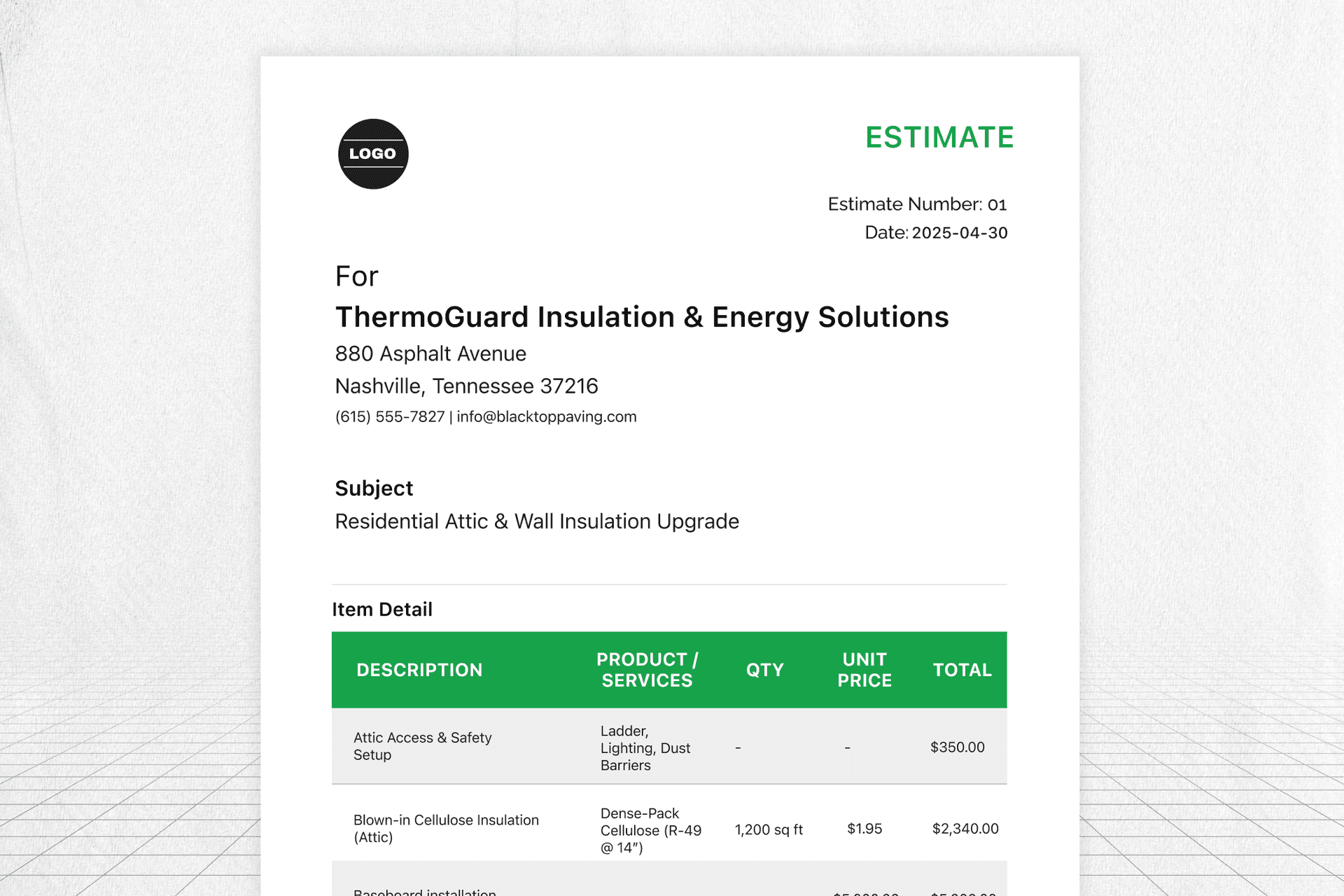
About this template
FieldCamp’s free insulation estimate template helps contractors create professional estimates in minutes. Stop losing jobs to slow quotes. Calculate materials, labor, and insulation costs with precision.
Add client details, list your services, break down materials, and set clear payment terms. Whether you’re quoting spray foam, blown-in, or batt insulation, this template keeps everything organized. Customize it with your logo and reuse it for every job.
Key Features
- Calculate total insulation costs automatically
- Smart material and labor cost breakdown
- Built-in tax and markup fields
- Professional layouts for all insulation types
,
|
ESTIMATE
#1
Issued: 2026-03-04
Due: 2026-03-04
BILL TO:
Services Provided
| DESCRIPTION | PRODUCT / SERVICE | QTY | UNIT PRICE | TOTAL |
|---|---|---|---|---|
| Removed old and installed R-49 blown-in fiberglass with air sealing | Attic Insulation - Blown-In | 1 | $2220.00 | $2220.00 |
| Closed-cell spray foam application for rim joist areas | Spray Foam Insulation - Basement Rim Joist | 1 | $525.00 | $525.00 |
| Install R-15 fiberglass batt insulation in exterior walls | Wall Insulation - Batt Installation | 1 | $1000.00 | $1000.00 |
Built for Every Insulation Contractor
A good estimate does more than list prices; it shows clients you know what you’re doing.
This template helps you break down every part of the job: materials, labor, R-values, air sealing, and removal if needed. When homeowners see a clear, itemized quote, they trust you more. And trust closes deals.
Whether you’re handling attic insulation, crawl space encapsulation, or a full-home spray foam retrofit, this template keeps your pricing organized and professional. No more scribbling numbers on the back of a business card.
How to Use This Insulation Estimate Template?
Step 1: Download the template
Grab the free insulation estimate template in PDF format. Ready to fill out in minutes.
Step 2: Add client and project details
Fill in the client’s name, address, phone, and email. Include the project address if it’s different. Add the estimate date and note any specific requests, like working around a finished basement or scheduling around tenants.
Step 3: Measure and calculate materials
Measure the square footage for each area: attic, walls, crawl space, and rim joists. Factor in R-value requirements based on your climate zone. If you’re removing old insulation, note that too.
Not sure how to price labor? Use our free labor cost calculator to get your numbers right.
Step 4: Break down your costs
List everything:
- Insulation materials (fiberglass, cellulose, spray foam)
- Labor by area or by hour
- Old insulation removal and disposal
- Air sealing and vapor barriers
- Equipment (blower rental, spray rig costs)
- Permits and inspections
- Cleanup
Step 5: Add totals and tax
The template handles the math. Just input your line items and tax rate—it calculates subtotals and the final price automatically.
Step 6: Add your branding
Drop in your logo, company name, phone number, and license info. Include your certifications if you have them (BPI, RESNET, manufacturer certs). A branded estimate looks more professional and builds trust.
Step 7: Review and send
Double-check your numbers, save the file, and send it off. Email works great. Follow up in 24–48 hours if you don’t hear back.
$0 to Start. $0 Excuses.
If it doesn’t help, it costs you nothing. If it does, you’ll wonder why you waited.
Frequently Asked Questions
How do I customize this template for my insulation business?
Add your logo, company name, and contact info at the top. Include your license number and any certifications (BPI, RESNET, etc.). Adjust payment terms to match how you operate, deposit upfront, balance on completion, or progress payments for bigger jobs.
What should I include in an insulation estimate?
Cover the basics: client info, project address, square footage, insulation type, and R-value. Break down material and labor costs separately. Include removal fees if you’re replacing old insulation, plus air sealing, vapor barriers, equipment, permits, and cleanup. Clear estimates prevent surprises later.
How do I calculate insulation materials accurately?
Measure square footage for each area. For blown-in, check the manufacturer’s coverage chart to figure out how many bags you need for your target R-value. For spray foam, calculate board-feet (square footage × inches of thickness). For batts, measure between studs and add 5–10% for waste. Always round up.
How long should my insulation estimate stay valid?
30 days is standard. It gives homeowners time to decide while protecting them from material price swings. For larger jobs or when prices are volatile, consider 14 days. Always put the expiration date on the estimate so there’s no confusion.
Should I include energy savings in my estimate?
It can help close the deal; homeowners like knowing they’ll save money on energy bills. Mention utility rebates and tax credits if they apply. Just don’t promise specific savings numbers. Use ranges and note that actual results depend on the home and usage.
Can I use this for commercial insulation projects?
Yes. The template works for residential and commercial. For bigger jobs, add sections for project phases, safety requirements, and compliance documentation. Include your insurance certificate and any OSHA info the client needs.
What’s the easiest way to turn my estimate into an invoice?
If you’re using FieldCamp, it’s one click. The estimate converts to an invoice automatically, just update quantities if anything changed during the job. No retyping, no errors.