

FieldCamp’s AI
Dispatcher Playbook
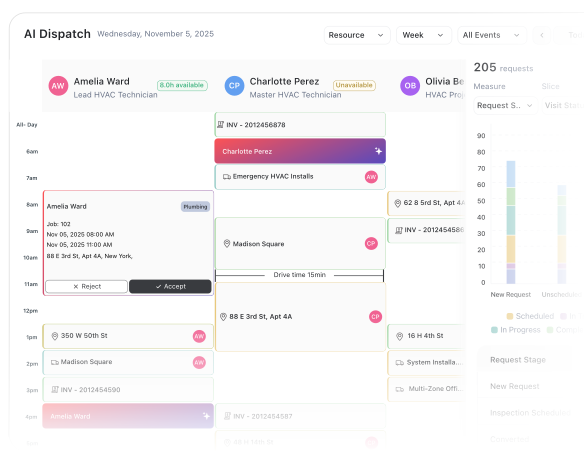
Modern field service teams are handling more jobs, more disruptions, and more customer expectations than ever before. That’s why FieldCamp has created a complete AI Dispatching Playbook.
Discover a practical guide, that walks you through the entire journey of dispatching, right from its origins and evolution, to what today’s AI dispatcher actually is, how its algorithms work, why it’s built the way it is, and how it becomes a revenue-positive system for your field service team.
If your goal is to run a more organized, more efficient, and more profitable service operation, this guide shows you exactly how AI dispatching makes it possible.
AI Dispatching Guide
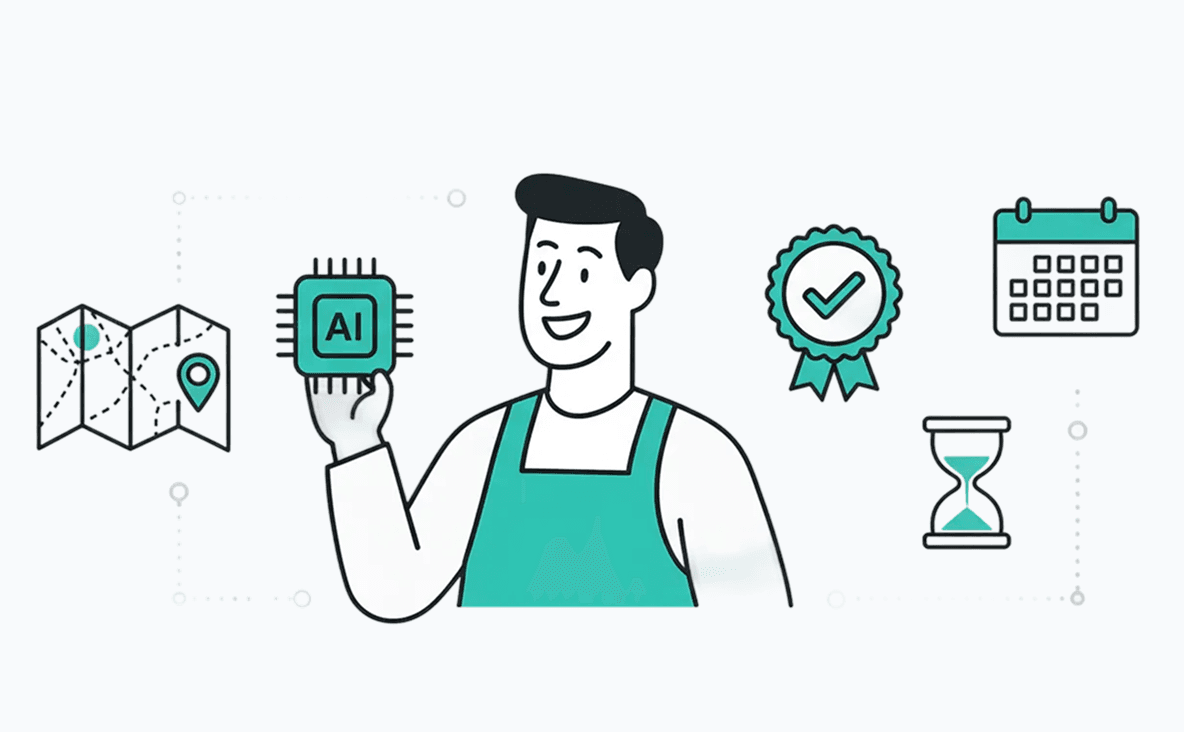
Understanding AI dispatching starts with understanding dispatching itself. In this section, we’ll walk you through the essential foundations that every service business should know before adopting AI dispatching.
From the history and evolution of scheduling, to the shift from manual processes to algorithm-driven optimization, this playbook helps you understand why AI is the natural next step.
Foundation
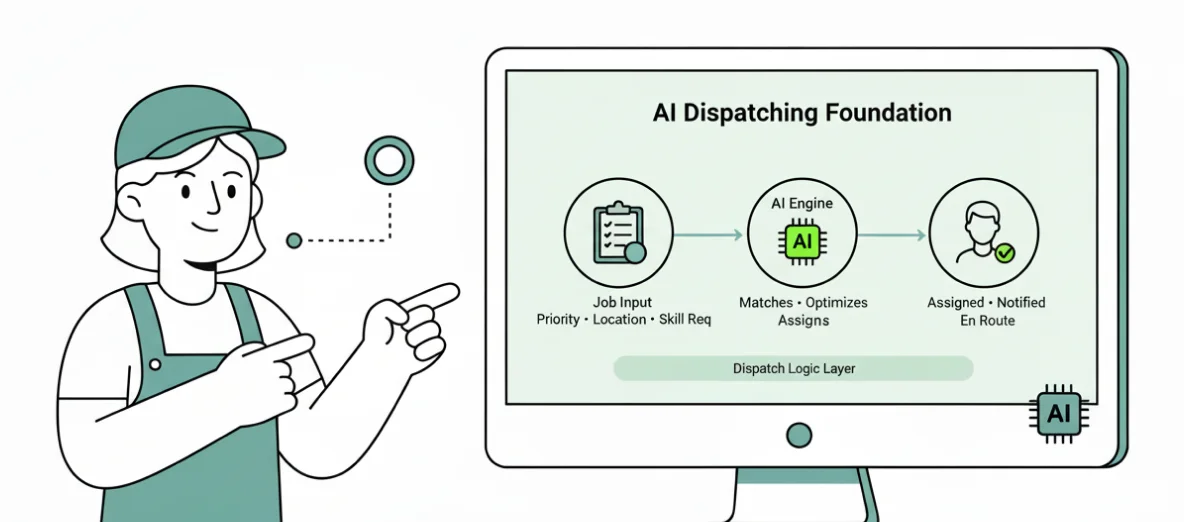
AI dispatching starts with understanding how dispatching decisions are actually made. This foundation explains what an AI dispatcher is, how it evolved from manual boards, and why traditional dispatching breaks at scale. These articles help service leaders understand the logic, philosophy, and mindset behind AI-driven scheduling—before diving into routes, capacity, or automation.
If dispatch feels reactive today, this is where clarity begins. It sets the baseline for smarter decisions, clearer accountability, and systems that respond to reality instead of relying on constant human intervention or last-minute adjustments.

History and Evolution of Dispatching
Learn how dispatching has changed from paper boards to AI-driven automation

Understand the fundamentals of intelligent scheduling and how it works.

See how AI evaluates job priority, urgency, windows, and technician constraints.
Estimate how much time, travel, and money your team can save with AI.

AI Dispatching vs Traditional Dispatch Software
Compare rule-based tools with AI systems built for real-world complexity.

Explore how AI evaluates trade-offs humans can’t process in real time.
The core principles behind AI-first field service operations

Machine Learning Models in Dispatching
A deep dive into routing engines, constraint solvers, and optimization logic.

How AI Dispatcher Algorithms Work
How AI builds routes that adapt to real-world constraints, not just distance

AI Route Optimization Explained
How AI builds routes that adapt to real-world constraints, not just distance

Multi-Stop Route Planning with AI
Learn how AI sequences jobs to minimize travel & maximize capacity.

Understand the optimization logic that cuts fuel costs and idle time

How AI balances workload instead of overloading technicians.
Route Optimization
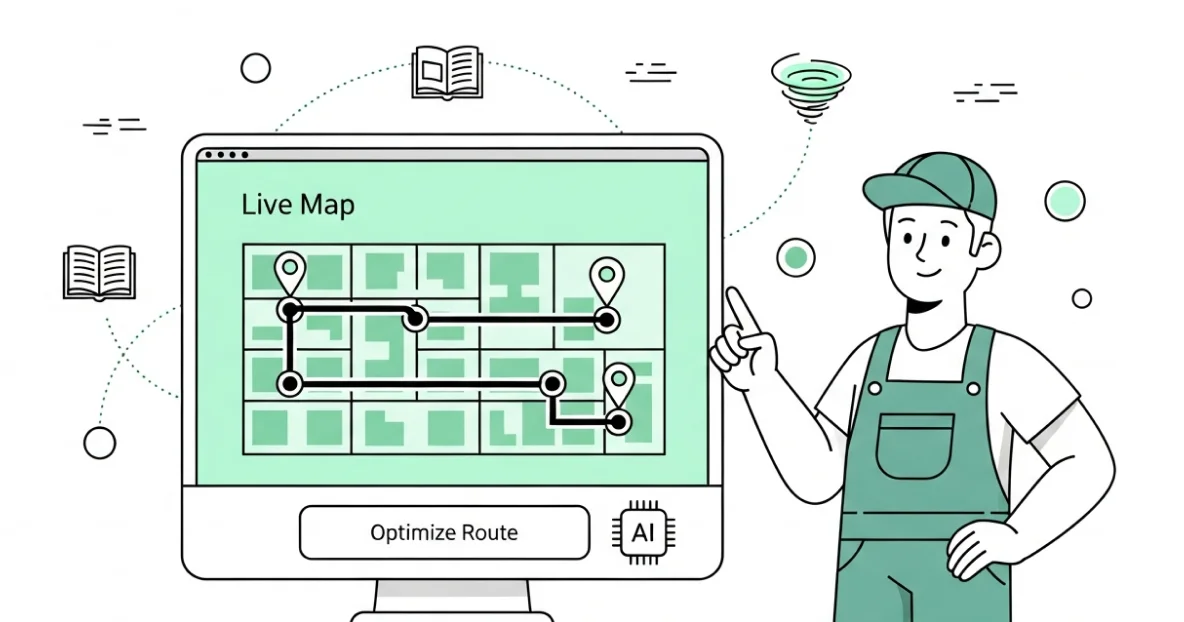
Route optimization is where AI dispatching starts delivering visible impact. Instead of static routes, AI continuously re-optimizes based on traffic, job duration, capacity, and real-time changes. This category explains how AI reduces drive time, handles multi-stop routes, adapts mid-day, and balances workload without manual intervention—turning routing into a live system, not a daily task.
Smart Scheduling
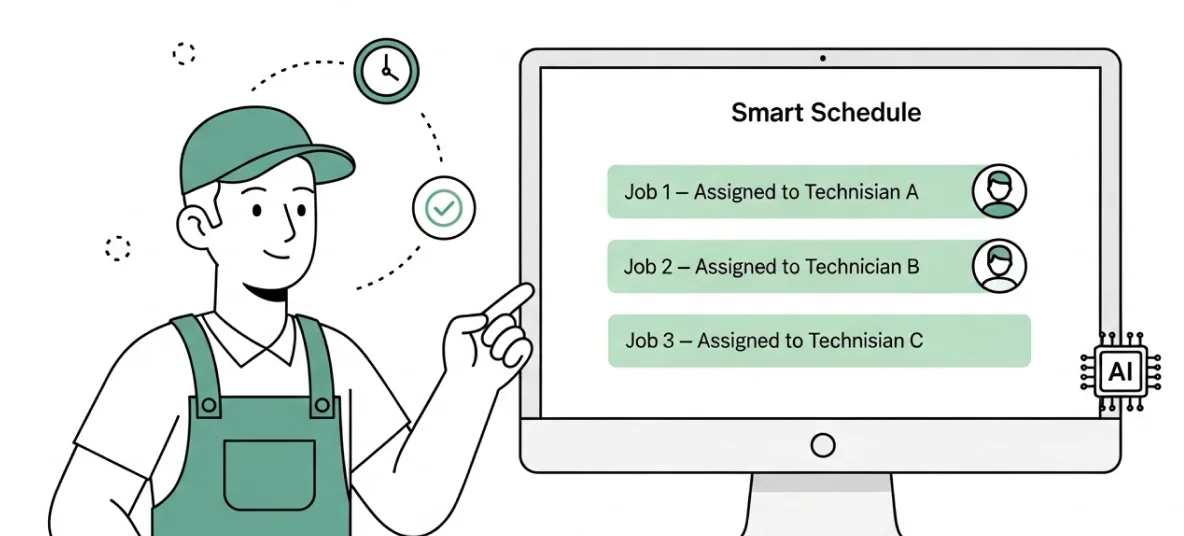
Smart scheduling moves beyond filling calendars. AI dispatchers schedule jobs based on time windows, job duration, technician availability, and downstream impact—automatically adjusting when reality changes. This section explains how AI handles complex scheduling scenarios like multi-day jobs, long-range planning, and alternative time windows without breaking operational flow.
Schedules are auto-adjusted considering priorities, skills, & availability.

Learn how AI respects customer availability without sacrificing efficiency.
AI predicts workload & team capacity in advance to prevent overbooking.

How AI uses flexible scheduling to recover from delays.

See how AI schedules jobs that span multiple days without manual tracking.

How AI plans ahead while staying adaptable.

Skill Based Technician Assignment
How AI assigns jobs only to technicians with the right skills, experience, and eligibility.

How AI Matches Jobs to Technicians
Here’s how AI evaluating job requirements against tech profiles to make precise assignments.

Certifications & Qualifications in AI Dispatch
AI validating certifications & qualifications to ensure compliance & reduce costly errors.

Preferred Technician Assignment
How AI balances customer preferences with availability and efficiency when assigning familiar technicians.
Skills & Technician Matching
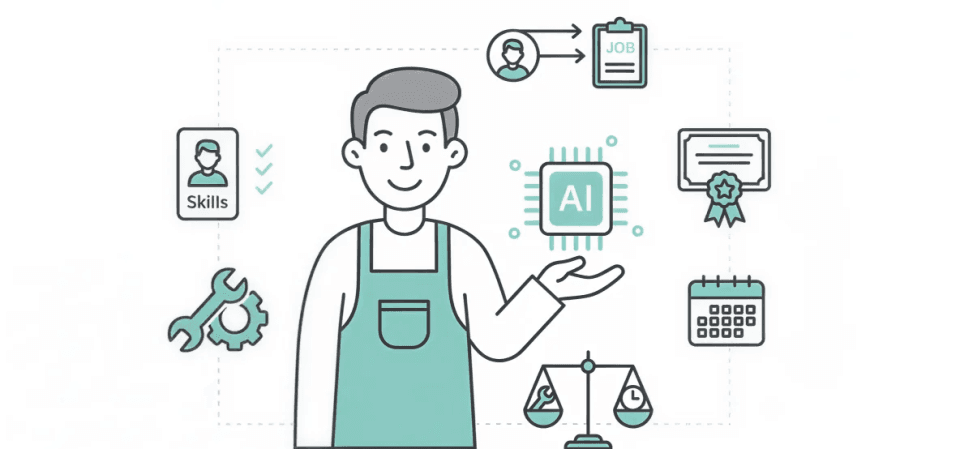
AI dispatching isn’t just about assigning any technician—it’s about assigning the right technician for every job. AI evaluates technician skills, certifications, experience levels, and job requirements in real time. This is to ensure that each job is handled by a technician who meets the exact requirements, reducing rework, callbacks, and compliance risks.

Workload & Fairness
Workload & fairness ensures work is distributed intelligently across the team, preventing burnout while maintaining operational efficiency. AI monitors technician schedules, total workload, job difficulty, and overtime patterns to balance assignments fairly. AI understands when uneven distribution is necessary and when fairness must take priority.
How AI distributes jobs evenly across technicians to maintain productivity without overload.
How AI detects fatigue patterns and adjusts schedules to protect technician well-being.
How AI minimizes unnecessary overtime while still meeting service commitments.
How AI uses fairness logic to prevent biased or repetitive job assignments.