
AI DISPATCHER · PREFERRED-TECH ROUTING
Mrs. Kowalski has wanted Dave for 8 years.
Customer preference is retention data, not scheduling friction. AI Dispatcher honors preferred-tech requests when the route cost is reasonable, finds a close-fit alternative when Dave is booked, and prevents the same “favorite” tech from being overloaded by everyone’s first pick.
PREFERRED-TECH DISPATCHING
Why preferred-tech requests break manual scheduling.
Mrs. Kowalski asks for Dave, gets Mike
Customer preference lives in a sticky note on the file. The dispatcher forgets, sends Mike, the customer notices on arrival. Trust drops one visit.
Honoring preferences kills the route
The dispatcher honors the request by stuffing Dave’s day with three preferred-customer detours across town. Route efficiency drops 35%. Other customers get late ETAs.
Dave is everyone’s favorite — Dave burns out
Half the recurring book asks for Dave. The dispatcher accommodates. Dave works 9.5-hour days for two months. Dave quits in month three.
New customers never get to ask
Mrs. Kowalski asked because she was around long enough to learn it was an option. New customers do not know to ask. The first visit gets a random tech who never becomes “their” tech.
HOW AI DISPATCHER HELPS
How AI Dispatcher honors customer preference.
01
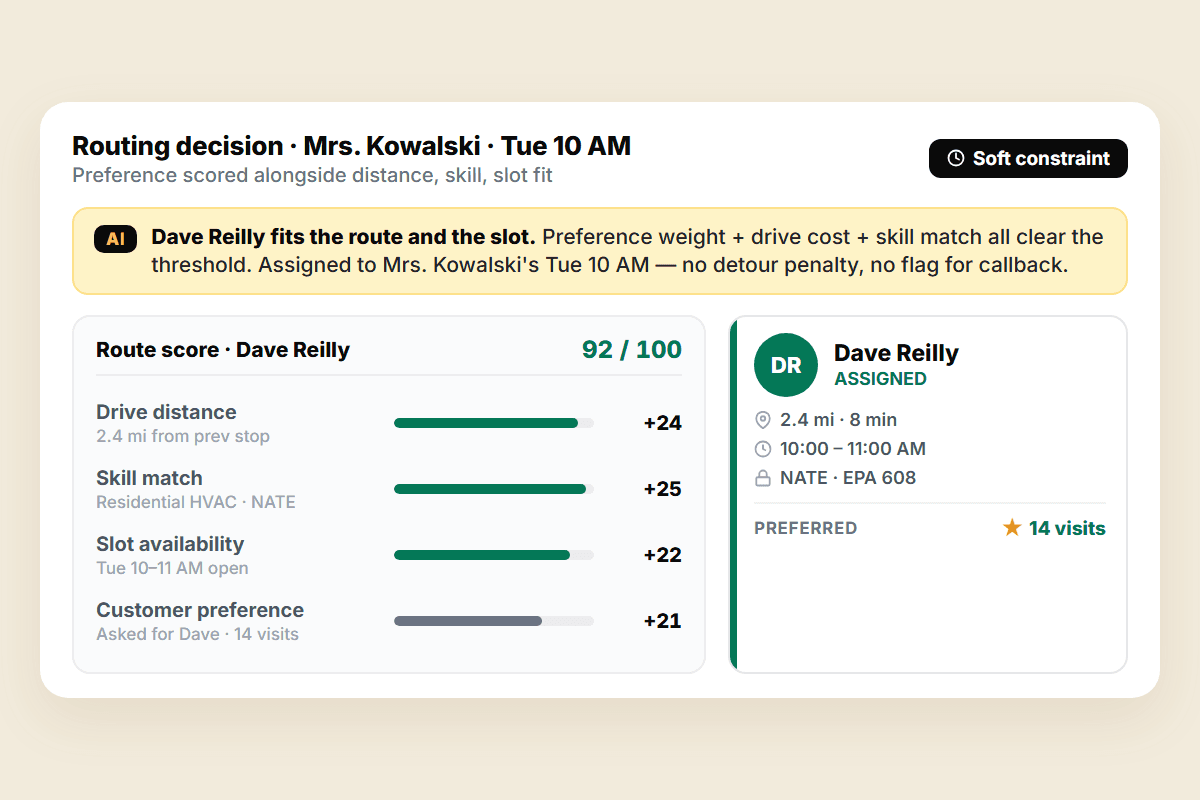
Preference as a soft
constraint in the route engine
Customer preference is not a sticky note. It is a routing rule — a weighted score the AI considers alongside drive distance, skill match, and slot availability. When Dave fits the route and the slot, Dave gets the job. When the cost of detouring to Dave exceeds the preference value, the system proposes a close-fit alternative and flags the customer for a follow-up call.
02
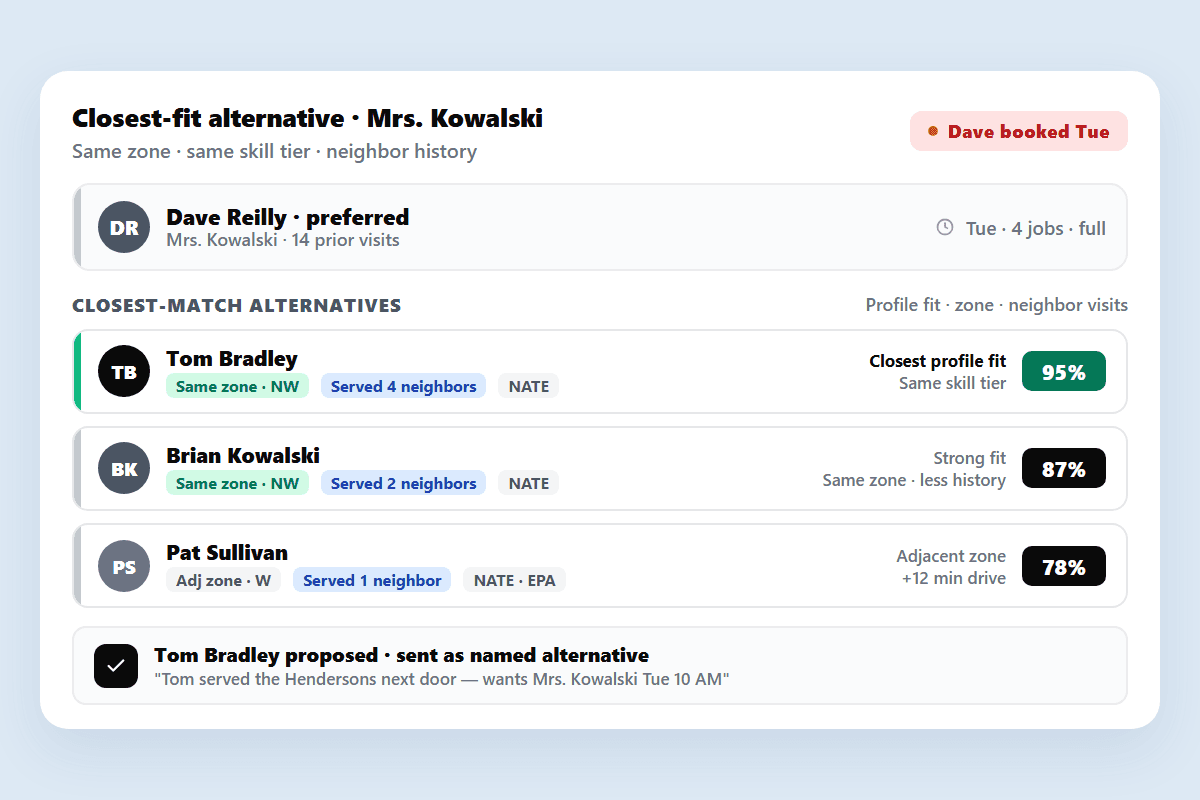
Smart alternative when the preferred tech is booked
Dave is booked Tuesday. Mrs. Kowalski wants Tuesday. The AI finds the tech with the closest matching profile — same skill tier, same zone, similar visit history with Mrs. Kowalski’s neighbors — and proposes that tech. The customer gets a name, not a stranger. The match feels intentional, not random.
03
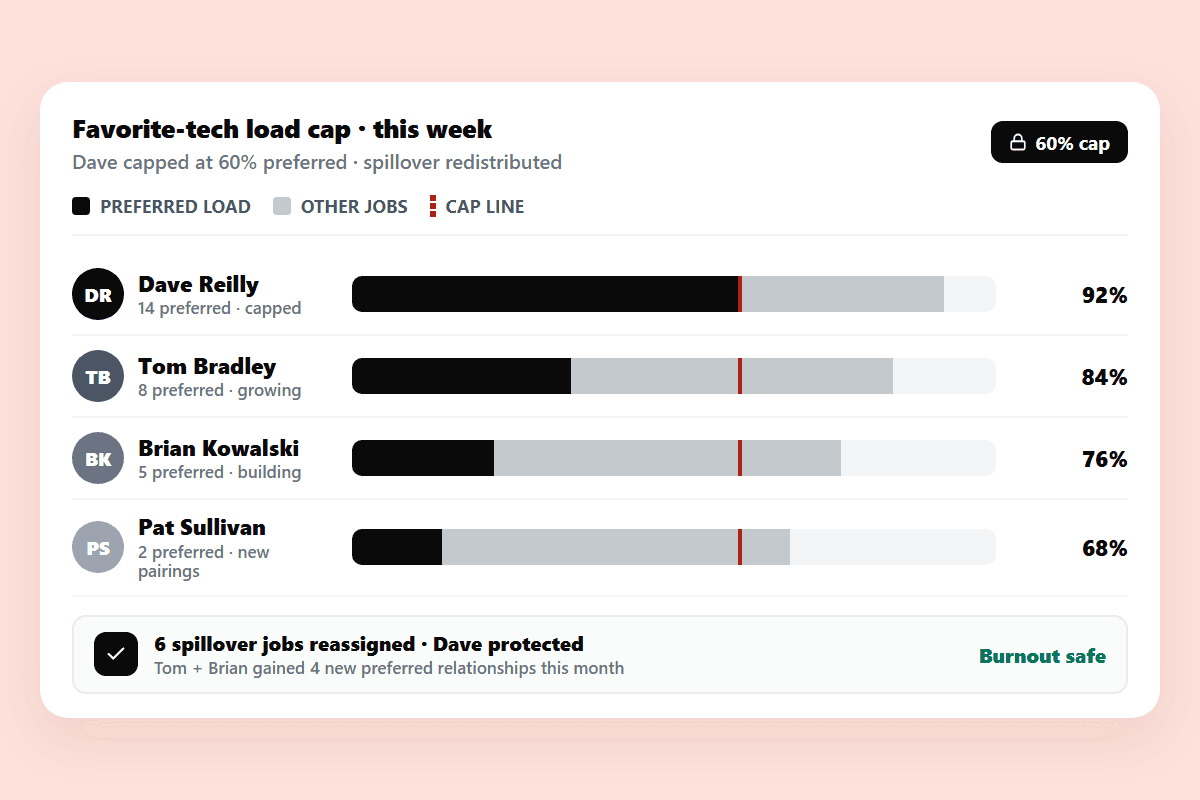
Favorite-tech overload cap
If half the recurring book asks for Dave, the AI caps Dave’s preferred-customer load at a sustainable level — say 60% of his weekly capacity. The remaining slots open to the next-best-fit tech, who builds their own loyalty over time. Dave does not burn out being everyone’s favorite.
Customer preference is the cheapest retention play in field service.
The cost of acquiring a residential service customer ranges from $150 to $400. The cost of keeping one is a tech they recognize at the door. AI Dispatcher converts “I’d like Dave again” from a sticky-note request into routing logic — which means the loyalty signal compounds visit after visit instead of getting lost in the dispatch board. Retention goes up. Churn goes down. The cost of next quarter’s customer acquisition drops with it.
Book a Demo Now
WORKS WITH YOUR DISPATCH STACK
Connects to the tools field service teams actually use.
AI Dispatcher sits on top of the existing FSM. Preference data flows in from the customer file, preferred-tech routing flows back into the schedule.
ServiceTitan
Pull customer preference notes, visit history, and tech assignment patterns. Push preferred-tech-aware assignments back.
Housecall Pro
Import customer profiles and past tech assignments. Preference becomes a routing input automatically.
Jobber
Sync client preferences and recurring service plans. Preferred tech locked into the recurring book.
QuickBooks
Customer LTV reporting reflects retention from preference-honored visits — visible to ownership.
READY?
Stop losing customers
to a random tech at the door.
See how AI Dispatcher honors preferred-tech requests, caps favorite-tech overload, and turns customer loyalty into routing logic. Free trial — no credit card.
No credit card required · Live in 30 minutes · Cancel anytime
Frequently Asked Questions
How does AI Dispatcher honor a customer’s preferred technician?
Customer preference is not a sticky note — it is a routing rule. AI Dispatcher treats preference as a soft constraint: a weighted score the optimizer considers alongside drive distance, skill match, and slot availability. When the preferred tech fits the route and the slot, the AI assigns them automatically. When the detour cost exceeds the preference value, the system proposes a close-fit alternative and flags the customer for follow-up. Powered by skill-based dispatching.
What happens when the preferred tech is fully booked?
The AI finds the tech with the closest matching profile — same skill tier, same zone, similar visit history with the customer’s neighbors — and proposes that tech with a customer-facing name, not a random reassignment. Mrs. Kowalski wants Dave on Tuesday but Dave is booked, so the system offers Carlos who works the same zone, has the same EPA tier, and has visited three houses on Mrs. Kowalski’s block. The match feels intentional, not random. See zone-based dispatching.
How does the system prevent a favorite tech from being overloaded?
The AI caps any single tech’s preferred-customer load at a sustainable level — typically 60% of weekly capacity, configurable per shop. When Dave hits the cap, the remaining preference requests are routed to the next-best-fit tech, who builds their own loyalty over time. Dave does not work 9.5-hour days for two months and quit in month three. Workload balancing tracks the cap by hours, not job count.
Does honoring preferences hurt route efficiency?
Only when preference is treated as a hard constraint. AI Dispatcher treats it as a soft constraint with a weighted score — when honoring the preference fits inside the route budget, it wins; when it would force a 35% efficiency drop, the system proposes the close-fit alternative and flags it. The dispatcher does not have to choose between retention and efficiency — the optimizer balances both per assignment.
How does AI Dispatcher learn customer preference without manual tagging?
Preference data is learned from completed visit history. When the same tech serves the same customer 3+ times without an exception, the AI tags the assignment as a soft preference automatically. The dispatcher does not have to maintain a manual preference list — the loyalty signal builds itself from the work that already happened.
What about new customers who do not know to ask for a tech?
The AI builds the first-visit assignment with retention in mind — matching skill tier, zone proximity, and the tech’s preference-cap availability. The customer gets a tech who can become “their” tech if the visit goes well. The second visit defaults to the same tech unless capacity blocks it. New customers do not have to know to ask — the system builds loyalty by default.
Does FieldCamp work with my existing CRM for preference data?
FieldCamp sits on top of your existing FSM. Two-way OAuth integrations with ServiceTitan, Housecall Pro, Jobber, ServiceTrade, Salesforce Field Service, MS Dynamics, and Service Fusion. Customer preference notes, visit history, tech assignment patterns, and customer LTV sync in real time. No data migration. Setup runs in under 30 minutes.
How does preferred-tech routing improve customer retention?
The cost of acquiring a residential service customer ranges $150–$400. The cost of keeping one is a tech the customer recognizes at the door. By converting “I’d like Dave again” from a sticky-note request into routing logic, AI Dispatcher compounds the loyalty signal visit after visit. Retention rises, churn falls, and CAC drops with it. Customer LTV reporting in QuickBooks reflects the retention from preference-honored visits — visible to ownership.