

Free Service Proposal Template
Most contractors lose jobs not because of price, but because their proposals look like they were typed in 5 minutes. FieldCamp’s free service proposal template comes with built-in scope of work, Good/Better/Best pricing tiers, payment terms, and a signature block. Fill it out, download it, and send it before your competitor does.
What’s Inside FieldCamp’s Service Proposal Template
This isn’t a blank document with your name on top. Every section is pre-structured, pre-written, and ready to customize, so you spend 10 minutes filling it in instead of 2 hours figuring out what to write.
• Cover Page: A professional first page with your company name, client name, proposal number, and date. First impressions decide whether the client reads the rest or tosses it.
• Company & Client Information: Your business details and the client’s details side by side — name, address, phone, email, license number, and property type. Keeps everything organized and shows you’re a legitimate, licensed operation.
• Project Summary: The job title, a clear description of the work, start and completion dates, and the service location. This is what the client skims first, so it needs to answer “what are you doing, where, and when” in 30 seconds.
• Scope of Work: An itemized line-by-line table with every service, quantity, unit price, and auto-calculated totals including tax. No vague “HVAC installation – $5,000” lines. Specificity builds trust and prevents pricing disputes after the job starts.
• Exclusions: What’s NOT included in the project. This one section prevents more scope creep and costly disputes than anything else in the entire proposal. If you skip it, the client will assume everything is included, and you’ll eat the cost.
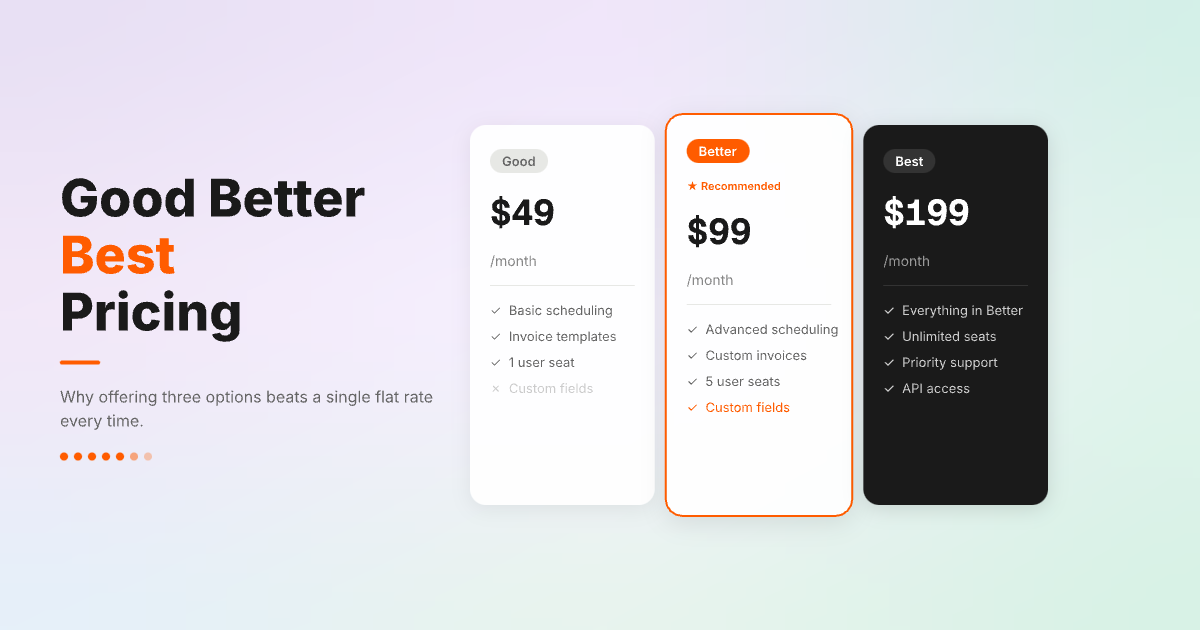
• Good/Better/Best Pricing Tiers: Three side-by-side pricing options so the client picks a package instead of saying “let me think about it.” The Good tier is your base price, Better is your recommended option, and Best is the premium. Most clients choose the middle, which is exactly where your best profit margin sits.
• Terms & Conditions: Payment terms, warranty details, project timeline, cancellation policy, change order process, permits, and liability coverage, all pre-written and ready to edit. You’re not a lawyer, and you shouldn’t have to write this from scratch for every job.
• Authorization & Signatures: A sign-off block for both you and the client with printed name, signature line, and date. Once both parties sign, this proposal becomes a binding agreement without a separate contract needed for most residential and commercial service work.
Every section in this service proposal template is built around what actually wins jobs in field service, not generic business proposal filler. The scope of work table auto-calculates your totals.
The Good/Better/Best pricing tiers are formatted for easy comparison. The terms and conditions cover payment schedules, warranties, change orders, and liability, so you don’t have to write legal language from scratch.
Knowing what’s inside the template is step one. Making it actually win the job is step two. We put together a quick checklist of pro tips, such as leading with the client’s problem instead of your company bio, how to structure your pricing, and when to send the proposal for the highest close rate.
Service Proposal Mistakes That Cost Contractors Jobs
Most contractors don’t lose work because their price is too high.
They lose it because their proposal left the client with too many unanswered questions, a vague scope that says “install new system” without listing specs, one high price with no options, no exclusions section, so the client assumes everything’s included, and no expiration date, so there’s zero urgency to decide.
These are the proposals that end up in the “I’ll think about it” pile, which is really just the rejection pile with a politer name.
The fix isn’t writing longer proposals. It’s using the right structure: clear scope of work, Good/Better/Best pricing tiers, exclusions, payment terms, and a signature block that makes it official.
That’s what this template is built for. Not sure if you need a proposal or a quote? Here’s the difference:
Service Proposal vs Quote: Which One Does Your Job Need?
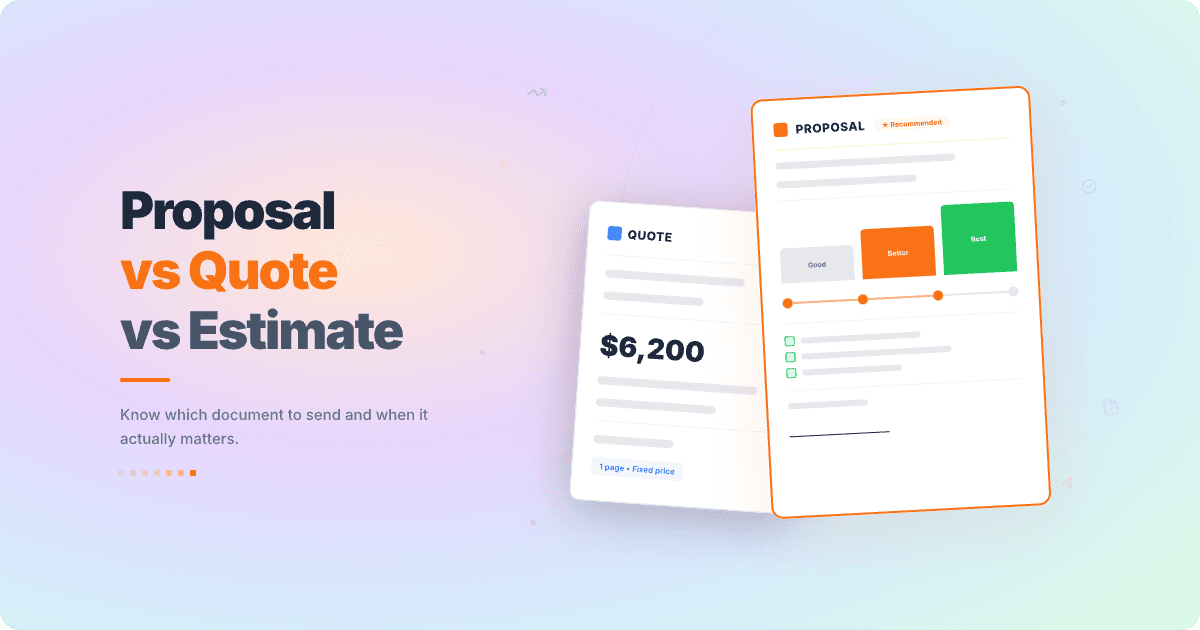
Contractors use these interchangeably, but they serve different purposes.
A rough cost calculation before the site visit? That’s an estimate.
A fixed price for a straightforward job? That’s a quote.
A detailed document with scope, options, and terms for complex or competitive work? That’s a proposal, and that’s what this template is built for.
More Free Resources for Field Service Contractors
No matter your field service specialty, we have templates designed for your industry.

Proposals Shouldn’t Take Longer Than the Job Itself
You didn’t start a service business to spend your evenings formatting documents. FieldCamp turns your job details into a signed proposal before the client has time to call your competitor.

Frequently Asked Questions
What is a service proposal?
A service proposal is a detailed document you send to a potential client before starting work. It outlines your company details, scope of work, pricing options, project timeline, payment terms, and conditions. Unlike a quick estimate or verbal quote, a proposal sells your solution and gives the client everything they need to say yes, including authorization signatures that make it a binding agreement.
What’s the difference between a proposal and an estimate?
An estimate is a rough cost calculation, usually one page, approximate numbers, not legally binding. A proposal is a complete project document with detailed scope, tiered pricing, timelines, terms, and signatures. Use estimates for quick ballparks and initial conversations. Use proposals when you’re competing for the job, the project is complex, or the value exceeds $5,000. If you just need an estimate, grab our free estimate template.
What should a service proposal include?
Every professional proposal needs: your company information (name, logo, license number), client details, a project summary, detailed scope of work, exclusions (what’s NOT included), pricing with Good/Better/Best options, project timeline with milestones, payment terms and deposit requirements, terms and conditions, and a signature block for both parties. Missing any of these makes you look amateur and opens the door for disputes.
Is a proposal legally binding?
A proposal becomes legally binding once both parties sign it. Before signatures, it’s an offer — the client can accept, reject, or negotiate. That’s why your proposal should include clear terms and conditions, a cancellation policy, and a change order process. Once signed, it functions as a contract. If you want extra protection on large jobs, have a separate contract that references the proposal.
How do I price a service proposal using Good-Better-Best?
Create three tiers. Good: the basic job, minimum scope, lowest price. Better: the recommended package with added value (extended warranty, premium materials, additional services). Best: the full premium experience. Price the “Good” tier at your standard rate, “Better” at 30–50% more, and “Best” at 75–100% more. Most clients pick the middle option, which is exactly where your best margin sits. Not sure what your costs actually are? Use the labor cost calculator to figure out your real numbers before setting tiers.
Should I charge for creating proposals?
For standard residential jobs, free proposals are the industry norm. For complex commercial projects requiring engineering calculations, detailed site surveys, or custom design work, charging a consultation fee of $75–$200 is reasonable. Credit the fee toward the project if they hire you. Always be upfront about your policy before scheduling the site visit.
How long should a proposal be valid?
30 days is standard for most service work. For projects involving volatile material costs (copper, lumber, refrigerant), shorten it to 14–21 days. Always include an expiration date; it creates urgency and protects you from price increases. After expiration, you can reissue with updated pricing without awkward conversations.
How do I follow up after sending a proposal?
Follow up within 48 hours with a brief call or text: “Just checking if you had any questions about the proposal.” If no response, follow up again at day 5 and day 10. After that, a final “closing the file” message at day 14 often triggers a response. Proposals sent with a follow-up sequence close at nearly double the rate of those sent and forgotten. FieldCamp’s CRM tracks every client interaction so nothing falls through the cracks.
Can I customize this proposal template for my industry?
Yes. This is a generic service proposal template that works for any trade, like HVAC, plumbing, electrical, landscaping, roofing, construction, cleaning, painting, and more. Customize the scope of work section with your specific services, adjust the pricing tiers for your market, and add your company branding. Save your customized version as a master template for reuse.
What’s the best format to send a proposal?
PDF is the standard; it’s professional, works on every device, can’t be accidentally edited, and prints cleanly. Never send proposals as editable Word docs (clients can change your pricing). For faster turnaround, send the PDF via email with a brief cover message, or text it directly from the job site. Proposals sent within 24 hours of the site visit close at twice the rate of those sent days later.